Showing posts with label 2009. Show all posts

Monday, May 2, 2011

Zagato Perana Z-One, 2009

Zagato Perana Z-One, 2009


Zagato is launching an exciting World Premiere on the occasion of the 2009 Geneva Motor Show: the Zagato Perana Z-One (Zee-One).
The sports car Zagato Perana Z-One signals the first collaboration of the Milanese Coachbuilders with a South African Vehicle Manufacturer: Perana Performance Group.

The Perana project is the result of Zagato's 90 year-long expertise in constructing fully functional running concepts. Virtual reality development has been integrated from inception, effectively eliminating the need for the traditional styling model and enabling the prototype to be completed in less than 4 months by the South African team.

Design Concept
As the latest descendant of the Zagato sports car family, Z-one is designed with full blooded Zagato form language.
Reflecting this pure passion from this brand new sports car specialist, the proportion and volume of Z-one is even tighter than usual sports car styling, accentuated by couple of long and dynamic curves with keen edge which visually integrate some important design features like the air out-lets. Surfaces defined by those cutting edges are even more sculptured maintaining the modern Zagato line which we have been developing for a decade.

Initiative
Following in the footsteps of Zagato's long tradition of masterfully designed cars, the Zagato Perana Z-One is no mere dream car, but a thoroughly practical and feasible production proposition that is expected to be available for sale to discerning European buyers by July 2009.
The Zagato Design Centre has styled the Zagato Perana Z-one to ensure it is built as a limited series production car. Sales will be limited to 999 cars per annum within Europe to assure exclusivity and to commemorate the 90 years of Zagato design.

Complying with Euro 4 emission legislation, this value proposition is expected to be launched at the introductory price of under 50.000 Euros, before taxes - an irresistible and highly competitive offer.

Technical Development
From the innovative tubular and box section chassis to the exciting interior styling, the Zagato Perana Z-One is a concentration of advanced design and engineering. Fully certifiable for the road, this ultra high-performance, front engined sports coupé uses a powerful 6.2 litre V8 engine that drives the rear wheels. This genuine 2-seater coupé, enjoys the benefits of almost 50/50 weight distribution allowing for exhilarating, balanced and predictable road manners.

Specification Sheet
    * Dimension
          o Curb Weight: 1195 kg
          o Weight Distribution
                + Front: 50%
                + Rear: 50%
          o Wheelbase: 2540 mm
          o Track
                + Front: 1627 mm
                + Rear: 1570 mm
          o Length: 4406 mm
          o Height: 1233 mm
          o Width: 1924 mm
          o Seating Capacity: 2
    * Engine
          o Configuration: V8, All Aluminium
          o Displacement: 6200 cc
          o Power: 328 kW
          o Torque: 583 Nm
          o Max. rpm: 6600 rpm
          o Fuel Delivery: Fuel Injection. Electronic, Sequential Port.
          o Compression Ratio: 10.7: 1
    * Drive train
          o Gearbox: 6 speed manual
          o Differential: ZF Limited Slip
    * Wheels: Perana / Zagato
          o Front: 18 x 10J
          o Rear: 19 x 12J
    * Tyres: Michelin PS2
          o Front: 275/35 ZR18
          o Rear: 345/30 ZR19
    * Chassis
          o Layout: Front/Mid Engine, RWD
          o Frame: Steel Tube Space Frame
          o Body: Vinyl-Ester/Glass Composite
    * Brakes
          o Front: 325mm
          o Rear: 305mm
          o Assist type: Vacuum
    * Steering: ZF Power Assist
    * Suspension
          o Front: Unequal Length A-arms, Eibach springs, Bilstein shocks, Anti-roll bar
          o Rear: Unequal length A-arms, Eibach springs, Bilstein shocks, Anti-roll bar
    * Fuel Capacity: 85 litres
    * Performance
          o Power/weight ratio: 328 hp (240 kW)/tonne
          o 0-100km/h: <4 secs (est)
          o 0-160km/h: <10 secs (est)

Zagato Perana Z-One, 2009

Zagato Perana Z-One, 2009


Zagato is launching an exciting World Premiere on the occasion of the 2009 Geneva Motor Show: the Zagato Perana Z-One (Zee-One).
The sports car Zagato Perana Z-One signals the first collaboration of the Milanese Coachbuilders with a South African Vehicle Manufacturer: Perana Performance Group.

The Perana project is the result of Zagato's 90 year-long expertise in constructing fully functional running concepts. Virtual reality development has been integrated from inception, effectively eliminating the need for the traditional styling model and enabling the prototype to be completed in less than 4 months by the South African team.

Design Concept
As the latest descendant of the Zagato sports car family, Z-one is designed with full blooded Zagato form language.
Reflecting this pure passion from this brand new sports car specialist, the proportion and volume of Z-one is even tighter than usual sports car styling, accentuated by couple of long and dynamic curves with keen edge which visually integrate some important design features like the air out-lets. Surfaces defined by those cutting edges are even more sculptured maintaining the modern Zagato line which we have been developing for a decade.

Initiative
Following in the footsteps of Zagato's long tradition of masterfully designed cars, the Zagato Perana Z-One is no mere dream car, but a thoroughly practical and feasible production proposition that is expected to be available for sale to discerning European buyers by July 2009.
The Zagato Design Centre has styled the Zagato Perana Z-one to ensure it is built as a limited series production car. Sales will be limited to 999 cars per annum within Europe to assure exclusivity and to commemorate the 90 years of Zagato design.

Complying with Euro 4 emission legislation, this value proposition is expected to be launched at the introductory price of under 50.000 Euros, before taxes - an irresistible and highly competitive offer.

Technical Development
From the innovative tubular and box section chassis to the exciting interior styling, the Zagato Perana Z-One is a concentration of advanced design and engineering. Fully certifiable for the road, this ultra high-performance, front engined sports coupé uses a powerful 6.2 litre V8 engine that drives the rear wheels. This genuine 2-seater coupé, enjoys the benefits of almost 50/50 weight distribution allowing for exhilarating, balanced and predictable road manners.

Specification Sheet
    * Dimension
          o Curb Weight: 1195 kg
          o Weight Distribution
                + Front: 50%
                + Rear: 50%
          o Wheelbase: 2540 mm
          o Track
                + Front: 1627 mm
                + Rear: 1570 mm
          o Length: 4406 mm
          o Height: 1233 mm
          o Width: 1924 mm
          o Seating Capacity: 2
    * Engine
          o Configuration: V8, All Aluminium
          o Displacement: 6200 cc
          o Power: 328 kW
          o Torque: 583 Nm
          o Max. rpm: 6600 rpm
          o Fuel Delivery: Fuel Injection. Electronic, Sequential Port.
          o Compression Ratio: 10.7: 1
    * Drive train
          o Gearbox: 6 speed manual
          o Differential: ZF Limited Slip
    * Wheels: Perana / Zagato
          o Front: 18 x 10J
          o Rear: 19 x 12J
    * Tyres: Michelin PS2
          o Front: 275/35 ZR18
          o Rear: 345/30 ZR19
    * Chassis
          o Layout: Front/Mid Engine, RWD
          o Frame: Steel Tube Space Frame
          o Body: Vinyl-Ester/Glass Composite
    * Brakes
          o Front: 325mm
          o Rear: 305mm
          o Assist type: Vacuum
    * Steering: ZF Power Assist
    * Suspension
          o Front: Unequal Length A-arms, Eibach springs, Bilstein shocks, Anti-roll bar
          o Rear: Unequal length A-arms, Eibach springs, Bilstein shocks, Anti-roll bar
    * Fuel Capacity: 85 litres
    * Performance
          o Power/weight ratio: 328 hp (240 kW)/tonne
          o 0-100km/h: <4 secs (est)
          o 0-160km/h: <10 secs (est)

Tuesday, April 26, 2011

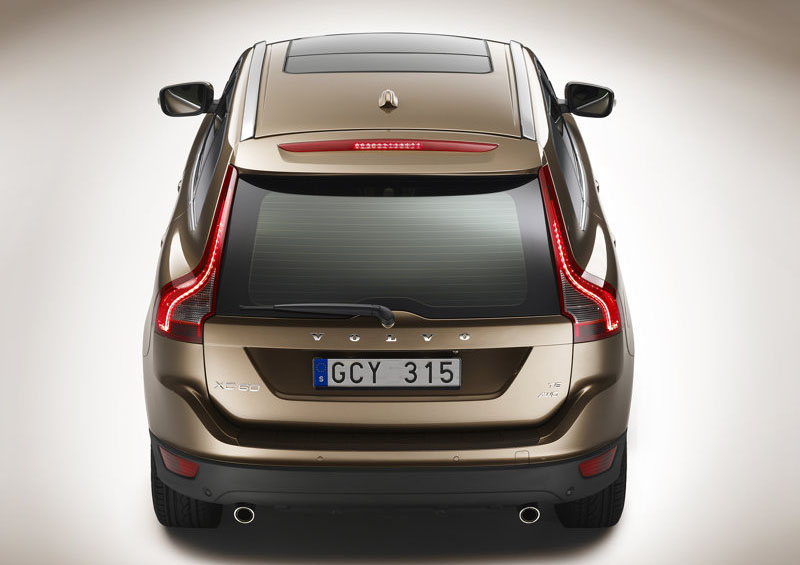
Volvo XC60, 2009

Volvo XC60, 2009


The new Volvo XC60 is the first vehicle in a new generation of the contemporary cross-over concept. It is a combination of a traditional city vehicle and an XC vehicle aimed for young, professional urban people with an active life. Volvo XC60 is a sporty and dynamic car with tasteful exterior and interior design and versatile functionality.

Exterior
Volvo XC60 has a characteristic XC design language, with a blend of passenger- and coupe-like car shapes - including a touch of well-known Volvo design elements. The formula-drive stance, with big wheels "in the corners", lifted visual platform and a very high waistline - all contribute to a sturdy and robust impression. The V-shape design, i.e. front spoiler, LED lamps, bonnet, goes all the way to the rear.

The rear design is characterised by the tail lamps with micro optics and LED technique. The lamps, distributing light in a special way, give a characteristic "Volvo" design impression.

Integrated roof rails
The roof rails provide a solid and tight impression. They are available in two versions - Charcoal (standard) or Silk-Metal - and built into the car at the factory.

Body
The advanced front structure consists of deformation zones of different grades of steel, each one with a certain role in a collision. The structure is designed to help providing increased protection in a frontal collision.

Side structures of different grades of steel and a number of tubes and members are all designed to "move" the body to the side, help reducing the risk of passenger compartment intrusion. Volvo's Side Impact Protection System helps absorbing the forces in order to maintain an adequate space for the passengers.

Lower cross member
The front structure has been supplemented by a lower cross member that adapts the front to the height of a normal-sized passenger car. This enables the other car's deformation zones to function as they were intended to provide protection for the car's occupants.

News - panoramic roof
The panoramic roof is a new detail that replaces the traditional sunroof. It is divided into two sections and gives the interior an airy and fresh feeling. The roof glass is tinted and laminated.

Laminated glass contributes to increased security
Laminated glass can be chosen in all of the car's windows to make break-in considerably more difficult.

Roll Stability Control (RSC) and Roll-Over Protection System (ROPS)
Roll Stability Control is an active function that intervenes in situations when the car is exposed to forces that could cause it to roll over. The function helps stabilise the car and reduces the risk of rolling over in an accident.

If a rollover accident should occur the Roll-Over Protection System helps to protect the passengers. An inclination sensor included in the Roll Stability Control continuously reads the cars roll rate. If threshold values are exceeded, the system takes action by for example deploying the inflatable Curtains. The Roll-Over Protection System is a complex system that includes the body's safety structure as well as the SRS components.

Interior
The interior is driver oriented and designed to create a dynamic feel. The lines on panels and surfaces connect different interior panels with each other to create a harmonious style with "loops." Thick and thin lines contribute to the XC profile.

The characteristic and floating centre console gives a dynamic and sporty impression. The centre console is slightly angled towards the driver to enhance the driver dynamics. The visual "X" in the seats and backrests enhances the dynamic appearance.

Practical loading area
The loading area has a lockable load floor covering two storage areas, one for personal items and another for soiled or wet items. The load cover extends over the entire loading area. The rear door prevents the floor hatch from being opened when the car is closed and locked.

Three interior levels
The following interior levels are available for the Volvo XC60:
    * Full textile - a combination of two different textiles and available in Off-Black or Soft Beige.
    * T-Tec and textile - available in Anthracite Black/Off-Black or Soft Beige/Mocca.
    * Leather in Off-Black or Soft Beige - offered with the accent colours Lemon Green/Off-Black or Soft Beige/Espresso Brown.

Two wood inlays
Two different wood inlays are available: Classic Wood and Nordic Light Oak. The standard base theme is called Charcoal, and another inlay theme is called Brushed Aluminium.

Power tailgate
The optional power tailgate can be opened automatically in three ways - via the remote control, by a button in the light panel or by opening the tailgate with the handle. The automatic opening feature is very convenient if you approach the car loaded down with shopping bags.

Three-section rear seat
The three-split (40/20/40) rear seat and backrest offer two separate seats with an armrest in the middle, or three seats with safety belts for each occupant. The seat cushions are fixed and the backrest(s) can be individually folded.

Six-cylinder turbo engine
The 3-litre, six-cylinder turbo engine is transversely mounted and very compact. The engine delivers 285 horsepower and 400 Nm of torque, from low up to high revs. The turbo-six provides a high level of driving pleasure, with quick throttle response at all speeds, ideal for quick overtaking, for example.

Five-cylinder turbo-diesel in two variants
The Volvo XC60 is available with two five-cylinder turbo-diesel engines, producing 163 hp and 340 Nm or 185 hp and 400 Nm. The diesel engines combine low fuel consumption with sporty driving characteristics. The driveability is very good even with a heavy load or when driving with a trailer. Both engines are equipped with a diesel particulate filter (DPF) to help reduce the amount of harmful particles in the exhaust gases.

Six-speed automatic transmission with Geartronic
The compact, six-speed automatic transmission has been engineered to handle the high torques developed by engines such as the T6 and the powerful D5 diesel engine. Geartronic enables the automatic transmission to be used as a manual gearbox as well.

Six-speed manual transmission
The manual six-speed gearbox provides good tractive power in each gear in order to combine rapid acceleration with high top speed.

All Wheel Drive (AWD) for enhanced stability
All Wheel Drive is an electronically controlled system that distributes engine power between the front and rear wheels quickly and automatically, depending on which wheel pair (front or rear wheels) has the best grip at the moment. The system helps enhance stability and reduces under/over steering, and contributes to increased driver control and a comfortable ride.

Trailer Stability Assist (TSA) for stabilising car and trailer
Trailer Stability Assist is intended for stabilising the car and trailer. The system detects if the trailer starts "snaking"; a phenomenon that may occur at certain speeds depending on the mass of the trailer and how it is loaded. If Trailer Stability Assist senses snaking tendencies, it brakes the car's individual wheels to counteract the oscillation. Trailer Stability Assist is activated at speeds between 60 and 160 kph.

Further developed Dynamic Stability and Traction Control (DSTC)
Volvo's Dynamic Stability and Traction Control system has been further developed and registers the car's roll rate continuously, giving the opportunity to detect slowly built up skids at an early stage. Generally, the system helps stabilise the car in evasive manoeuvres, particularly when the car is exposed to high lateral forces.

Hill Descent Control (HDC) for steep inclines
Hill Descent Control controls the car's speed automatically when driving down steep inclines. The Hill Descent Control function makes it possible for the driver to focus completely on driving when descending steep hills. The driver can control the speed with the brake pedal or the accelerator when Hill Descent Control is activated.

Continuously Controlled Chassis Concept (FOUR-C)
Volvo's FOUR-C function monitor's the chassis' movements and makes it possible to choose a chassis setting that suits a certain driving style. The driver can choose between three settings: Comfort, Sport and Advanced.

Speed-dependent power steering contributes to easier steering
The Volvo XC60 is equipped with speed dependent and progressive power steering to make steering easier at low speeds. One of three steering force levels can be selected to suit different drivers and driving conditions.

News - City Safety
City Safety is a new function, sensing if vehicles ahead are moving slower or standing still. By measuring the car's speed and distance to the vehicle ahead, City Safety is able to calculate the braking force needed when approaching the other vehicle. In a situation where the calculated braking force needed reaches a certain level, and the driver has not reacted, the City Safety function senses that a collision is imminent.

The function is a standard feature that is active if the car's speed is below 30 km/h (19 mph). In situations where the difference in speed between two vehicles is 15 km/h (9 mph) or less, a collision can be avoided completely. In a potential collision situation in which the difference in speed between the vehicles is between 15-30 km/h (9-19 mph), City Safety alone cannot prevent a collision. However, the consequences of the impending collision can be mitigated considerably because the system will intervene to reduce speed when the collision occurs.

News - Pre-Prepared Restraints
Pre-Prepared Restraints - a new function - is able to prepare/adapt the belts and airbags to an expected crash load in low or mildly severe frontal collisions before the actual impact happens. This means that the belts and airbags get some 'extra' time to prepare before the impact and help making the safety belts and airbags even more effective. Remember to always use safety belts when driving or travelling in a car. Pre-Prepared Restraints is a standard feature in Volvo XC60.

Collision Warning with Autobrake alerts the driver
Collision Warning with Autobrake alerts the driver if the distance to a vehicle ahead suddenly decreases. The function contributes in giving the driver a fair chance to avoid a collision. The system's braking function prepares for heavy braking and brakes the car automatically (with up to 50% of the maximum braking power) if the driver has not reacted to the warning signal. Collision Warning with Autobrake is an optional feature.

Volvo XC60, 2009

Volvo XC60, 2009


The new Volvo XC60 is the first vehicle in a new generation of the contemporary cross-over concept. It is a combination of a traditional city vehicle and an XC vehicle aimed for young, professional urban people with an active life. Volvo XC60 is a sporty and dynamic car with tasteful exterior and interior design and versatile functionality.

Exterior
Volvo XC60 has a characteristic XC design language, with a blend of passenger- and coupe-like car shapes - including a touch of well-known Volvo design elements. The formula-drive stance, with big wheels "in the corners", lifted visual platform and a very high waistline - all contribute to a sturdy and robust impression. The V-shape design, i.e. front spoiler, LED lamps, bonnet, goes all the way to the rear.

The rear design is characterised by the tail lamps with micro optics and LED technique. The lamps, distributing light in a special way, give a characteristic "Volvo" design impression.

Integrated roof rails
The roof rails provide a solid and tight impression. They are available in two versions - Charcoal (standard) or Silk-Metal - and built into the car at the factory.

Body
The advanced front structure consists of deformation zones of different grades of steel, each one with a certain role in a collision. The structure is designed to help providing increased protection in a frontal collision.

Side structures of different grades of steel and a number of tubes and members are all designed to "move" the body to the side, help reducing the risk of passenger compartment intrusion. Volvo's Side Impact Protection System helps absorbing the forces in order to maintain an adequate space for the passengers.

Lower cross member
The front structure has been supplemented by a lower cross member that adapts the front to the height of a normal-sized passenger car. This enables the other car's deformation zones to function as they were intended to provide protection for the car's occupants.

News - panoramic roof
The panoramic roof is a new detail that replaces the traditional sunroof. It is divided into two sections and gives the interior an airy and fresh feeling. The roof glass is tinted and laminated.

Laminated glass contributes to increased security
Laminated glass can be chosen in all of the car's windows to make break-in considerably more difficult.

Roll Stability Control (RSC) and Roll-Over Protection System (ROPS)
Roll Stability Control is an active function that intervenes in situations when the car is exposed to forces that could cause it to roll over. The function helps stabilise the car and reduces the risk of rolling over in an accident.

If a rollover accident should occur the Roll-Over Protection System helps to protect the passengers. An inclination sensor included in the Roll Stability Control continuously reads the cars roll rate. If threshold values are exceeded, the system takes action by for example deploying the inflatable Curtains. The Roll-Over Protection System is a complex system that includes the body's safety structure as well as the SRS components.

Interior
The interior is driver oriented and designed to create a dynamic feel. The lines on panels and surfaces connect different interior panels with each other to create a harmonious style with "loops." Thick and thin lines contribute to the XC profile.

The characteristic and floating centre console gives a dynamic and sporty impression. The centre console is slightly angled towards the driver to enhance the driver dynamics. The visual "X" in the seats and backrests enhances the dynamic appearance.

Practical loading area
The loading area has a lockable load floor covering two storage areas, one for personal items and another for soiled or wet items. The load cover extends over the entire loading area. The rear door prevents the floor hatch from being opened when the car is closed and locked.

Three interior levels
The following interior levels are available for the Volvo XC60:
    * Full textile - a combination of two different textiles and available in Off-Black or Soft Beige.
    * T-Tec and textile - available in Anthracite Black/Off-Black or Soft Beige/Mocca.
    * Leather in Off-Black or Soft Beige - offered with the accent colours Lemon Green/Off-Black or Soft Beige/Espresso Brown.

Two wood inlays
Two different wood inlays are available: Classic Wood and Nordic Light Oak. The standard base theme is called Charcoal, and another inlay theme is called Brushed Aluminium.

Power tailgate
The optional power tailgate can be opened automatically in three ways - via the remote control, by a button in the light panel or by opening the tailgate with the handle. The automatic opening feature is very convenient if you approach the car loaded down with shopping bags.

Three-section rear seat
The three-split (40/20/40) rear seat and backrest offer two separate seats with an armrest in the middle, or three seats with safety belts for each occupant. The seat cushions are fixed and the backrest(s) can be individually folded.

Six-cylinder turbo engine
The 3-litre, six-cylinder turbo engine is transversely mounted and very compact. The engine delivers 285 horsepower and 400 Nm of torque, from low up to high revs. The turbo-six provides a high level of driving pleasure, with quick throttle response at all speeds, ideal for quick overtaking, for example.

Five-cylinder turbo-diesel in two variants
The Volvo XC60 is available with two five-cylinder turbo-diesel engines, producing 163 hp and 340 Nm or 185 hp and 400 Nm. The diesel engines combine low fuel consumption with sporty driving characteristics. The driveability is very good even with a heavy load or when driving with a trailer. Both engines are equipped with a diesel particulate filter (DPF) to help reduce the amount of harmful particles in the exhaust gases.

Six-speed automatic transmission with Geartronic
The compact, six-speed automatic transmission has been engineered to handle the high torques developed by engines such as the T6 and the powerful D5 diesel engine. Geartronic enables the automatic transmission to be used as a manual gearbox as well.

Six-speed manual transmission
The manual six-speed gearbox provides good tractive power in each gear in order to combine rapid acceleration with high top speed.

All Wheel Drive (AWD) for enhanced stability
All Wheel Drive is an electronically controlled system that distributes engine power between the front and rear wheels quickly and automatically, depending on which wheel pair (front or rear wheels) has the best grip at the moment. The system helps enhance stability and reduces under/over steering, and contributes to increased driver control and a comfortable ride.

Trailer Stability Assist (TSA) for stabilising car and trailer
Trailer Stability Assist is intended for stabilising the car and trailer. The system detects if the trailer starts "snaking"; a phenomenon that may occur at certain speeds depending on the mass of the trailer and how it is loaded. If Trailer Stability Assist senses snaking tendencies, it brakes the car's individual wheels to counteract the oscillation. Trailer Stability Assist is activated at speeds between 60 and 160 kph.

Further developed Dynamic Stability and Traction Control (DSTC)
Volvo's Dynamic Stability and Traction Control system has been further developed and registers the car's roll rate continuously, giving the opportunity to detect slowly built up skids at an early stage. Generally, the system helps stabilise the car in evasive manoeuvres, particularly when the car is exposed to high lateral forces.

Hill Descent Control (HDC) for steep inclines
Hill Descent Control controls the car's speed automatically when driving down steep inclines. The Hill Descent Control function makes it possible for the driver to focus completely on driving when descending steep hills. The driver can control the speed with the brake pedal or the accelerator when Hill Descent Control is activated.

Continuously Controlled Chassis Concept (FOUR-C)
Volvo's FOUR-C function monitor's the chassis' movements and makes it possible to choose a chassis setting that suits a certain driving style. The driver can choose between three settings: Comfort, Sport and Advanced.

Speed-dependent power steering contributes to easier steering
The Volvo XC60 is equipped with speed dependent and progressive power steering to make steering easier at low speeds. One of three steering force levels can be selected to suit different drivers and driving conditions.

News - City Safety
City Safety is a new function, sensing if vehicles ahead are moving slower or standing still. By measuring the car's speed and distance to the vehicle ahead, City Safety is able to calculate the braking force needed when approaching the other vehicle. In a situation where the calculated braking force needed reaches a certain level, and the driver has not reacted, the City Safety function senses that a collision is imminent.

The function is a standard feature that is active if the car's speed is below 30 km/h (19 mph). In situations where the difference in speed between two vehicles is 15 km/h (9 mph) or less, a collision can be avoided completely. In a potential collision situation in which the difference in speed between the vehicles is between 15-30 km/h (9-19 mph), City Safety alone cannot prevent a collision. However, the consequences of the impending collision can be mitigated considerably because the system will intervene to reduce speed when the collision occurs.

News - Pre-Prepared Restraints
Pre-Prepared Restraints - a new function - is able to prepare/adapt the belts and airbags to an expected crash load in low or mildly severe frontal collisions before the actual impact happens. This means that the belts and airbags get some 'extra' time to prepare before the impact and help making the safety belts and airbags even more effective. Remember to always use safety belts when driving or travelling in a car. Pre-Prepared Restraints is a standard feature in Volvo XC60.

Collision Warning with Autobrake alerts the driver
Collision Warning with Autobrake alerts the driver if the distance to a vehicle ahead suddenly decreases. The function contributes in giving the driver a fair chance to avoid a collision. The system's braking function prepares for heavy braking and brakes the car automatically (with up to 50% of the maximum braking power) if the driver has not reacted to the warning signal. Collision Warning with Autobrake is an optional feature.

Friday, April 8, 2011

Mitsubishi Eclipse Spyder GT, 2009

Mitsubishi Eclipse Spyder GT, 2009


For 2009, Mitsubishi restyled the Spyder's front and rear bumper fascias, and the GT model also gets three significant upgrades for 2009: a new dual exhaust system yields a more powerful sound while also boosting horsepower to 265 (up from 260); standard high intensity discharge (HID) head lamps sharpen front styling and aid nighttime visibility, and standard Active Stability Control (ASC) enhances driving safety. New interior cloth fabrics give all models a richer interior feel and appearance. The optional Deluxe Leather package for the GS model now includes aluminum pedals.

Eclipse is offered as the 4-cylinder GS and the V-6 GT. The GS model's 162-hp 2.4-liter 4-cylinder engine is teamed with a 5-speed manual transmission or an optional 4-speed automatic. The GT's 265 hp 3.8-liter V-6 produces 262 lb.-ft. of peak torque and is teamed with a 6-speed manual transmission or optional 5-speed automatic. In both engines, Mitsubishi Innovative Valve Timing Electronic Control (MIVEC) helps to optimize efficiency and power across a broad engine speed range. Automatic transmissions feature Sportronic™ shifters to allow manual gearshift control.

A rigid platform and 4-wheel independent suspension give the Mitsubishi Eclipse Spyder sporty road manners and a compliant ride. The GT features standard 18-inch alloy wheels. All models are equipped with four-wheel disc anti-lock brakes (ABS) and electronic brake-force distribution (EBD); the GT features larger, ventilated rear discs.

The Mitsubishi Eclipse Spyder's automatic cloth top folds out of sight under a flush-fitting powered tonneau cover in about 19 seconds. Multi-layer top construction provides a full headliner for the quiet, snug interior feeling of a coupe when it is raised. The glass rear widow has a defroster.

The wave-form instrument panel houses easy-to-reach controls and features distinctive motorcycle-inspired gauges and ice blue LED nighttime illumination. Three interior color schemes are offered: Techno-Sport (dark charcoal), Hi-Q Sport (medium gray) and Avante Garde (terra cotta). The high-back front bucket seats feature integrated, open head restraints for a sporty look and enhanced rear visibility. The steering wheel features audio system remote controls.

All Mitsubishi Eclipse Spyder models feature a standard 650-watt (max.) Rockford-Fosgate premium audio system with AM/FM/CD/MP3 playback capability, including a 6-disc, in-dash CD changer and SIRIUS® Satellite Radio with a 6-month pre-paid service subscription. The system is specifically engineered for the Mitsubishi Eclipse Spyder and provides automatic sound equalization for top-up or top-down driving. An 8-in. subwoofer integrated into the rear seat area provides deep bass sound as well as a unique design element.

Key Specifications
    * Wheelbase: 101.4 in.
    * Length: 180.4 in.
    * Height: 54.4 in. (54.7 in., 18-in. wheels)
    * Width: 72.2 in.
    * Curb weight: GS, 5-speed manual - 3,477 lbs. / GT, 6-speed manual - 3,754 lbs.

Mitsubishi Eclipse Spyder GT, 2009

Mitsubishi Eclipse Spyder GT, 2009


For 2009, Mitsubishi restyled the Spyder's front and rear bumper fascias, and the GT model also gets three significant upgrades for 2009: a new dual exhaust system yields a more powerful sound while also boosting horsepower to 265 (up from 260); standard high intensity discharge (HID) head lamps sharpen front styling and aid nighttime visibility, and standard Active Stability Control (ASC) enhances driving safety. New interior cloth fabrics give all models a richer interior feel and appearance. The optional Deluxe Leather package for the GS model now includes aluminum pedals.

Eclipse is offered as the 4-cylinder GS and the V-6 GT. The GS model's 162-hp 2.4-liter 4-cylinder engine is teamed with a 5-speed manual transmission or an optional 4-speed automatic. The GT's 265 hp 3.8-liter V-6 produces 262 lb.-ft. of peak torque and is teamed with a 6-speed manual transmission or optional 5-speed automatic. In both engines, Mitsubishi Innovative Valve Timing Electronic Control (MIVEC) helps to optimize efficiency and power across a broad engine speed range. Automatic transmissions feature Sportronic™ shifters to allow manual gearshift control.

A rigid platform and 4-wheel independent suspension give the Mitsubishi Eclipse Spyder sporty road manners and a compliant ride. The GT features standard 18-inch alloy wheels. All models are equipped with four-wheel disc anti-lock brakes (ABS) and electronic brake-force distribution (EBD); the GT features larger, ventilated rear discs.

The Mitsubishi Eclipse Spyder's automatic cloth top folds out of sight under a flush-fitting powered tonneau cover in about 19 seconds. Multi-layer top construction provides a full headliner for the quiet, snug interior feeling of a coupe when it is raised. The glass rear widow has a defroster.

The wave-form instrument panel houses easy-to-reach controls and features distinctive motorcycle-inspired gauges and ice blue LED nighttime illumination. Three interior color schemes are offered: Techno-Sport (dark charcoal), Hi-Q Sport (medium gray) and Avante Garde (terra cotta). The high-back front bucket seats feature integrated, open head restraints for a sporty look and enhanced rear visibility. The steering wheel features audio system remote controls.

All Mitsubishi Eclipse Spyder models feature a standard 650-watt (max.) Rockford-Fosgate premium audio system with AM/FM/CD/MP3 playback capability, including a 6-disc, in-dash CD changer and SIRIUS® Satellite Radio with a 6-month pre-paid service subscription. The system is specifically engineered for the Mitsubishi Eclipse Spyder and provides automatic sound equalization for top-up or top-down driving. An 8-in. subwoofer integrated into the rear seat area provides deep bass sound as well as a unique design element.

Key Specifications
    * Wheelbase: 101.4 in.
    * Length: 180.4 in.
    * Height: 54.4 in. (54.7 in., 18-in. wheels)
    * Width: 72.2 in.
    * Curb weight: GS, 5-speed manual - 3,477 lbs. / GT, 6-speed manual - 3,754 lbs.

Tuesday, March 22, 2011

Pontiac G6, 2009

Pontiac G6, 2009

 
Pontiac has announced that it is ringing in the new year with a fresh look for its best-selling line of G6 mid-size vehicles. Additional fuel-saving powertrain options, more aggressive exterior styling, and a sleek new instrument panel highlight the 2009.5 model Pontiac G6, which will begin arriving in the dealerships in January 2009.
All Pontiac G6 models, including sedans, coupes and convertibles, receive the interior upgrades. The uniquely styled Pontiac G6 GXP models will not be affected by the exterior or powertrain changes.

New Powertrain Options
For the first time, the Pontiac G6 coupe will be available with GM's fuel sipping, 164-horsepower 2.4L four-cylinder Ecotec engine. Linked to a six-speed automatic transmission, the coupe's new powertrain combo is capable of the same 33 miles per gallon fuel efficiency as the current Pontiac G6 sedan and also incorporates a new TAPshift manual shift system with steering wheel-mounted paddle controls.
In those areas where E85 ethanol-based fuel is readily available, a FlexFuel version of the 219-horsepower 3.5L V6 will be available as a no-cost alternative to the standard 3.5L engine on all body styles.

The optional 222-horsepower 3.9L V6 for the Pontiac G6 convertible remains unchanged, as does the standard 252-horsepower 3.6L V6 in all GXP models.

Sportier Exterior
Inspired by the sporty front end styling of the new Pontiac G8 performance sedan, the new G6 front fascia features chrome surrounds for the signature Pontiac dual port honeycomb grille. This same grille pattern is carried to an updated lower air dam.

Also new are a revised headlight design with clear park/turn lenses and amber lamps, body color mirrors and painted rockers on the sedan and coupe. An updated spoiler is available for base model sedans and is standard on the GT models.
New rear fascias unique to the sedan and coupe/convertible accommodate both single and dual exhaust, as well as larger diameter exhaust tips.
17-inch chrome wheel covers are now standard equipped on all four-cylinder, six-speed automatic sedans and coupes. An updated 17-inch wheel will be standard as a part of the popular Sun-and-Sound package.

Refreshed Interior
A revised center stack is the most obvious interior enhancement of the 2009.5 model Pontiac G6, sporting all new HVAC controls and an updated AM/FM/CD/MP3 radio with auxiliary audio input jack. The driver information center has moved to the gauge cluster, which has also been enhanced with new graphics and lighting.

The 2009.5 Pontiac G6 will also benefit from the integrated info-tainment opportunities in GM's optional MY LINK enhanced communication package. MY LINK integrates audio system, Bluetooth telephone, XM satellite radio and OnStar navigation functions in one simple package. It includes an upgraded USB-equipped radio system, allowing for direct control of various portable music players, plus provides a full year of both XM radio and OnStar Directions and Connections services.

Other interior changes include new dark satin nickel trim accents on the steering wheel, door panels, and shifter plate. New two-tone seats in an ebony-light taupe color combination are available in either cloth or leather for all models, offering an option to the standard ebony seats. A new optional ebony-titanium color leather seating package is also available on all GT and GXP models.

Pontiac G6, 2009

Pontiac G6, 2009

 
Pontiac has announced that it is ringing in the new year with a fresh look for its best-selling line of G6 mid-size vehicles. Additional fuel-saving powertrain options, more aggressive exterior styling, and a sleek new instrument panel highlight the 2009.5 model Pontiac G6, which will begin arriving in the dealerships in January 2009.
All Pontiac G6 models, including sedans, coupes and convertibles, receive the interior upgrades. The uniquely styled Pontiac G6 GXP models will not be affected by the exterior or powertrain changes.

New Powertrain Options
For the first time, the Pontiac G6 coupe will be available with GM's fuel sipping, 164-horsepower 2.4L four-cylinder Ecotec engine. Linked to a six-speed automatic transmission, the coupe's new powertrain combo is capable of the same 33 miles per gallon fuel efficiency as the current Pontiac G6 sedan and also incorporates a new TAPshift manual shift system with steering wheel-mounted paddle controls.
In those areas where E85 ethanol-based fuel is readily available, a FlexFuel version of the 219-horsepower 3.5L V6 will be available as a no-cost alternative to the standard 3.5L engine on all body styles.

The optional 222-horsepower 3.9L V6 for the Pontiac G6 convertible remains unchanged, as does the standard 252-horsepower 3.6L V6 in all GXP models.

Sportier Exterior
Inspired by the sporty front end styling of the new Pontiac G8 performance sedan, the new G6 front fascia features chrome surrounds for the signature Pontiac dual port honeycomb grille. This same grille pattern is carried to an updated lower air dam.

Also new are a revised headlight design with clear park/turn lenses and amber lamps, body color mirrors and painted rockers on the sedan and coupe. An updated spoiler is available for base model sedans and is standard on the GT models.
New rear fascias unique to the sedan and coupe/convertible accommodate both single and dual exhaust, as well as larger diameter exhaust tips.
17-inch chrome wheel covers are now standard equipped on all four-cylinder, six-speed automatic sedans and coupes. An updated 17-inch wheel will be standard as a part of the popular Sun-and-Sound package.

Refreshed Interior
A revised center stack is the most obvious interior enhancement of the 2009.5 model Pontiac G6, sporting all new HVAC controls and an updated AM/FM/CD/MP3 radio with auxiliary audio input jack. The driver information center has moved to the gauge cluster, which has also been enhanced with new graphics and lighting.

The 2009.5 Pontiac G6 will also benefit from the integrated info-tainment opportunities in GM's optional MY LINK enhanced communication package. MY LINK integrates audio system, Bluetooth telephone, XM satellite radio and OnStar navigation functions in one simple package. It includes an upgraded USB-equipped radio system, allowing for direct control of various portable music players, plus provides a full year of both XM radio and OnStar Directions and Connections services.

Other interior changes include new dark satin nickel trim accents on the steering wheel, door panels, and shifter plate. New two-tone seats in an ebony-light taupe color combination are available in either cloth or leather for all models, offering an option to the standard ebony seats. A new optional ebony-titanium color leather seating package is also available on all GT and GXP models.

Monday, March 21, 2011

Porsche Cayenne Turbo S, 2009

Porsche Cayenne Turbo S, 2009

 
The renowned Porsche crest, the Porsche Cayenne Turbo S is the most powerful Cayenne ever built. Sharing the same essential 4.8-liter V8 engine as the Cayenne S, GTS and Turbo, the Turbo S boasts 550 horsepower and 553 lb.-ft. of torque. That's a ten percent increase in power and a seven percent boost in torque over the Cayenne Turbo. The Porsche Cayenne Turbo S accelerates from zero to 60 mph (96 km/h) in 4.7 seconds on its way to a track-proven top speed of 174 mph (280 km/h). Like the Cayenne S and Cayenne Turbo, the Turbo S comes standard with a six-speed Tiptronic S driver-shiftable automatic transmission.

Given Porsche's sensitivity to environmental concerns, despite the astounding performance capabilities of the Porsche Cayenne Turbo S, the new model carries no fuel economy penalty over the Cayenne Turbo. Both the 2009 Porsche Cayenne Turbo and Porsche Cayenne Turbo S are rated by the EPA to deliver 12 mpg in the city and 19 mpg on the highway. And both are certified as Low- Emissions Vehicles, Tier II (LEV-II).

Instantly recognizable as a Cayenne, and clearly identifiable as a unique model, the Turbo S rides on standard 21 inch alloy wheels carrying humongous 295/35 wide-aspect tires. Other unique visual clues to the flagship's identity are the body-color wheel arch extensions and matte-finish air intake grilles. When seen from the rear, the Porsche Cayenne Turbo S is instantly recognizable by its dual-twin tailpipes made of precision cast aluminum, inspired by those on the Porsche Carrera GT. Finally, for those who want, the Porsche Cayenne Turbo S is offered in a unique exterior color: Lava Grey Metallic.

The passenger cabin of the Porsche Cayenne Turbo S boasts a unique look thanks to its standard two-color leather upholstery. Buyers have a choice of either Black/Havanna or Black/Steel Grey seating surfaces, as well as solid Black or Sand Beige. In addition, the dashboard and upper door panels have coordinating seams finished in the lighter upholstery color. The interior of the Turbo S is also distinct with its standard two-tone, padded leather steering wheel and carbon fiber door and dash trim. As with the Cayenne GTS, the Porsche Cayenne Turbo S boasts bolstered front and rear sport seats. The front seats have an extended memory feature and the three-person rear seat features contours for the outer positions.

Besides its more potent turbocharged engine, the Porsche Cayenne Turbo S differs mechanically from the Turbo by coming with Porsche Dynamic Chassis Control (PDCC) as standard equipment. PDCC features active control of body lean in curves for improved response, agility and increased passenger comfort.

Porsche Cayenne Turbo S, 2009

Porsche Cayenne Turbo S, 2009

 
The renowned Porsche crest, the Porsche Cayenne Turbo S is the most powerful Cayenne ever built. Sharing the same essential 4.8-liter V8 engine as the Cayenne S, GTS and Turbo, the Turbo S boasts 550 horsepower and 553 lb.-ft. of torque. That's a ten percent increase in power and a seven percent boost in torque over the Cayenne Turbo. The Porsche Cayenne Turbo S accelerates from zero to 60 mph (96 km/h) in 4.7 seconds on its way to a track-proven top speed of 174 mph (280 km/h). Like the Cayenne S and Cayenne Turbo, the Turbo S comes standard with a six-speed Tiptronic S driver-shiftable automatic transmission.

Given Porsche's sensitivity to environmental concerns, despite the astounding performance capabilities of the Porsche Cayenne Turbo S, the new model carries no fuel economy penalty over the Cayenne Turbo. Both the 2009 Porsche Cayenne Turbo and Porsche Cayenne Turbo S are rated by the EPA to deliver 12 mpg in the city and 19 mpg on the highway. And both are certified as Low- Emissions Vehicles, Tier II (LEV-II).

Instantly recognizable as a Cayenne, and clearly identifiable as a unique model, the Turbo S rides on standard 21 inch alloy wheels carrying humongous 295/35 wide-aspect tires. Other unique visual clues to the flagship's identity are the body-color wheel arch extensions and matte-finish air intake grilles. When seen from the rear, the Porsche Cayenne Turbo S is instantly recognizable by its dual-twin tailpipes made of precision cast aluminum, inspired by those on the Porsche Carrera GT. Finally, for those who want, the Porsche Cayenne Turbo S is offered in a unique exterior color: Lava Grey Metallic.

The passenger cabin of the Porsche Cayenne Turbo S boasts a unique look thanks to its standard two-color leather upholstery. Buyers have a choice of either Black/Havanna or Black/Steel Grey seating surfaces, as well as solid Black or Sand Beige. In addition, the dashboard and upper door panels have coordinating seams finished in the lighter upholstery color. The interior of the Turbo S is also distinct with its standard two-tone, padded leather steering wheel and carbon fiber door and dash trim. As with the Cayenne GTS, the Porsche Cayenne Turbo S boasts bolstered front and rear sport seats. The front seats have an extended memory feature and the three-person rear seat features contours for the outer positions.

Besides its more potent turbocharged engine, the Porsche Cayenne Turbo S differs mechanically from the Turbo by coming with Porsche Dynamic Chassis Control (PDCC) as standard equipment. PDCC features active control of body lean in curves for improved response, agility and increased passenger comfort.