Showing posts with label Nissan. Show all posts

Tuesday, July 12, 2011

2011 Nissan 370Z Roadster Reviews

Nissan 370Z Roadster
2011 Nissan 370Z Roadster
The standard equipment levels are available on 370Z and includes a button to start the engine with Nissan’s Intelligent Key, 18-inch wheels, cast aluminum, sports brakes and a viscous limited-slip differential. Designed Grip Provides a Yokohama Advan Sport tires of different sizes front and rear.

The Roadster model is offered in two versions: 2011 Nissan 370Z Roadster priced at $37,520 and 370Z Touring Roadster priced at $41,070.
The roadster sprints from 0 to 60 mph in 5.5 seconds and can hit a top speed of 155 mph (limited).

Nissan Europe has unveiled today a new gallery of images featuring the 2011 Nissan 370Z Roadster .
With convertible top in the closed position, the design provides a sophisticated sloped-back appearance, the perfect balance between the soft top and the Z body design.

The automatic latch system secures the top to – or releases it from – the windshield header without driver intervention. The Z® Roadster features an aluminum hood, door panels and trunk for reduced weight. The 2011 Nissan 370Z Roadster is offered in seven exterior colors: Solid Red, Magnetic Black, Brilliant Silver, Gun Metallic, Pearl White, Monterey Blue and Black Cherry.

The Z Roadster features high back black woven “Carbon” cloth seats with 8-way manual driver’s/4-way manual passenger’s seat adjustments. Touring models include unique leather-appointed seats with 4-way power/4-way manual operation on the driver’s seat (4-way power on the passenger’s seat). Standard interior comfort and convenience features include Nissan Intelligent Key™ with Push Button Ignition, power windows with one-touch auto up/down feature, power door locks with auto-lock feature and a center console box with a non-intrusive cover design.

The navigation system offers a number of enhancements (versus previous Nissan Navigation System designs), including four times higher screen resolution, Bluetooth Streaming Audio, on-board Zagat Survey restaurant ratings database, an in-dash DVD player and XM NavWeather weather information display (XM subscription required, sold separately).

The 2011 Nissan 370Z Roadster interior is available in Black cloth or for 370Z Touring Roadster models, a choice of Gray, Black or Wine leather-appointed A/C and heated ventilated seats.
Large ventilated discs can be found front and rear – 355mm (14.0 inch) at the front and 350mm (13.8 inch) behind – framed by four piston aluminium callipers at the front and twin piston callipers behind.

The GT Pack versions add heated and ventilated leather/suede seats, a premium BOSE sound system, cruise control and 19-inch forged alloy wheels.

Tuesday, May 17, 2011

2011 Nissan Altima sedan Reviews

2011 Nissan Altima sedan
2011 Nissan Altima sedan tries to combine the Ford Fusion’s performance with the Toyota Camry’s spacious cabin, but reviewers don’t think it tops either of these affordable midsize cars. Perhaps the Altima’s biggest drawback is its price. Kelley Blue Book, however, thinks the Altima Coupe can hold its ground. "Offering only one less pony than Honda's new Accord Coupe, but falling far short of the Hyundai Genesis Coupe's 306-horsepower, the Altima Coupe nevertheless has the goods to compete in an increasingly competitive market segment."

The Nissan Altima runs in the middle of the pack. If you’re looking for a better performer, test drive the Ford Fusion and Mazda6. Like the Altima, the Ford Fusion has an optional 3.5-liter V6 engine that is great for city and highway driving. The Fusion pairs a comfortable interior with good performance. The Mazda6 also ranks at the top of affordable midsize sedans in terms of performance. It averages about 22/31 mpg city/highway – about as much as the Altima – with a 2.5-liter engine and automatic transmission. In comparison, an Altima with equivalent features would list for $26,485.

Nissan Altima: The Details
The 2011 Nissan Altima is available as a sedan and a coupe. The Nissan Altima is largely unchanged for the 2011 model year

The Altima Sedan competes in the very competitive mid-size sedan segment, going head-to-head with the Toyota Camry, Honda Accord, Ford Fusion and Chevrolet Malibu.

The Altima Sedan's navigation system sees the biggest upgrade for latest model, moving from a 4.3-inch display to a 6.5-inch touch-screen unit. A new Bose audio system is also available on the Altima Sedan, featuring a standard 4.3 inch color display, 9-speakers, USB port and iPod connectivity, Bluetooth hands-free calling and Nissan's RearView Monitor system.

Other than a slight shuffling of option packages, the Nissan Altima is unchanged for 2011.
Well, the 2011 Nissan Altima is one of those exceptions. The Altima's fun factor depends largely on which engine you choose. The V6 version -- known as the 3.5 SR -- comes standard with a sport-tuned suspension that trades some ride comfort for sharper handling, making this Altima feel more like a sport sedan than a family sedan.

Body Styles, Trim Levels, and Options
The 2011 Nissan Altima is available in sedan and coupe body styles. The hybrid-powered Altima sedan is reviewed separately. The 2.5 S trim is available on both the sedan and coupe. The 2.5 S coupe adds 17-inch alloy wheels.

A number of option packages are available for the 2.5S. The Special Edition package includes alloy wheels, foglights, a rear spoiler, auto on/off headlights and a leather-wrapped steering wheel (with audio controls). The Convenience Plus package (sedan only) adds manual folding sideview mirrors with integrated turn signals, a sunroof and dual-zone automatic climate control. On the coupe, the SL package is essentially called the Leather package; it lacks rear A/C vents but gains xenon headlights.

The 3.5 SR adds a V6 engine, 17-inch alloy wheels (18s for the coupe), a sport-tuned suspension, heated side mirrors and the contents of the 2.5 S Convenience package. The 3.5 SR Sport package available on the sedan adds a sunroof, xenon headlights, foglights and dual-zone climate control. The 3.5 SR Premium package (available on the coupe and sedan) essentially includes all the 2.5 S coupe Premium package, SL package and Premium Audio package items.
The Technology package is available on the coupe and sedan versions of both the 2.5 S and 3.5 SR trims. It includes a hard-drive navigation system, real-time traffic and weather updates, Bluetooth streaming audio and digital music storage.

The 2011 Nissan Altima features two engine choices. A continuously variable automatic transmission (CVT) is mandatory on the sedan. The coupe gets a standard six-speed manual transmission with the CVT as an option. EPA estimated fuel economy is 23 mpg city/32 mpg highway and 27 mpg combined with the CVT and 23/31/26 mpg with the manual.
In Edmunds performance testing, a 3.5 sedan went from zero to 60 mph in 7 seconds.

Safety
Every Altima comes standard with antilock brakes, stability and traction control, front side airbags and side curtain airbags. The Nissan Altima has not been rated using the government's new, more strenuous 2011 crash testing procedures. The Altima coupe earned four stars for frontal impacts and five stars for side impacts. All coupes come with sportier seats that feature more side bolstering than the sedan's relatively flat chairs. The sedan offers a decent 15.3-cubic-foot trunk, while the coupe is significantly smaller at 8.2 cubic feet.

Driving Impressions
The 2011 Nissan Altima 2.5 should be just fine for most folks. The CVT is well suited to the more powerful V6, and the sport-tuned suspension paired with precise steering makes the Altima a credible sport sedan.

2012 Nissan Sport Cars Nissan Leaf Nismo RC Concept

2012 Nissan Sport Cars Nissan Leaf Nismo RC Concept
Nissan will unveil a racing variant of the Leaf electric car at the 2011 New York Auto Show, but the Nissan Leaf NISMO RC has little in common with its more pedestrian "sibling." NISMO started with a lithium ion battery pack and badging from a stock Leaf, then built a completely new vehicle around it.
2012 Nissan Sport Cars Nissan Leaf Nismo RC Concept
Despite featuring the same electric underpinnings as the production LEAF which went on sale in the US, Europe and Japan in December, the 2012 Nissan Sport Cars Nissan Leaf Nismo RC Concept – for ‘Racing Competition’ – is a genuine performance hatch. According to Nissan engineers, the 2012 Nissan Sport Cars Nissan Leaf Nismo RC Concept has achieved 0-100km/h sprint times of 6.85 seconds in preliminary testing, making it faster than a Volkswagen Golf GTI. Its top speed is a less spritely but still impressive 150km/h.
2012 Nissan Sport Cars Nissan Leaf Nismo RC Concept, the name that is written on its back panel just under the huge rear-wing. Its powertrain is 100% zero-emission Lithium-ion battery design, just like the one on the world’s first affordable mass market electric vehicle. Despite the lack of rear doors, rear seat, audio system, navigation, and other amenities, there is obvious family resemblance. But that’s where the similarities of the production Nissan Leaf and the Nissan Leaf Nismo RC end.
2012 Nissan Sport Cars Nissan Leaf Nismo RC Concept
There are no rear doors; the carpeting, navigation and stereo system are gone; and the battery pack has been relocated to the middle of the vehicle for better weight distribution. Speaking of weight, the 2012 Nissan Sport Cars Nissan Leaf Nismo RC Concept is about 40 percent lighter than the production Leaf, as a carbon fibre monocoque platform and more compact dimensions cut total weight to just 2,068 pounds. The race-ready Leaf is also a foot shorter and 6.7 inches wider, and with a scant 2.4 inches of ground clearance.
The 2012 Nissan Sport Cars Nissan Leaf Nismo RC Concept was created at the Nissan Global Design Centre in Japan and features removable front and rear sections, driver-adjustable rear wing, fixed windows, LED headlights, four-coat Pearl White paint, 18-inch six-spoke alloy wheels and Bridgestone racing tyres.
2012 Nissan Sport Cars Nissan Leaf Nismo RC Concept designed as a true racing machine car, starting with its full carbon fiber. The three body parts includes removable front and rear, fixed windows, LED headlights and taillights and rear wing adjustable. Special paint pearl white coat with 4-blue Nismo / Zero Emission graphics complete the exterior. 2012 Nissan Sport Cars Nissan Leaf Nismo RC Concept, which the “RC” stands for Racing Competition – makes its world debut at the 2011 New York International Auto Show, built to deliver a new meaning to the term “Racing Green.”
2012 Nissan Sport Cars Nissan Leaf Nismo RC Concept
Nissan says the NISMO RC will be used for demonstration purposes, so don't expect this Leaf to compete any time soon. The automaker does say, however, that it's considering a zero-emission spec series for the future. With an estimated run time of 20 minutes under racing conditions, the 30 minute quick-charge time (to achieve 80 percent capacity) would make for some leisurely pit stops. When the 2012 Nissan Sport Cars Nissan Leaf Nismo RC Concept is in motion, its 80kW AC motor generates 107 horsepower and 207 pound-feet of torque; good enough for a 0-60 time of 6.85 seconds and a 150-kph top speed of 93 miles per hour. It is projected to have a running time of around 20 minutes under racing conditions.
2012 Nissan Sport Cars Nissan Leaf Nismo RC Concept
“Combining the talents of Nismo, Nissan’s world renowned motorsports group, and engineers behind some of the company’s Super GT and FIA GT1 race teams, the Nissan Leaf Nismo RC will serve as a rolling laboratory for the accelerated development of EV and aerodynamic systems, as well as a platform for the development of new green motorsports series,” said Carlos Tavares, chairman, Nissan Americas in a statement. “Nissan LEAF owners are fully embracing this new world of zero emission technology. We believe the same potential exists in the motorsports world as well, with Nissan proud to be first on the starting grid.”

Saturday, April 30, 2011

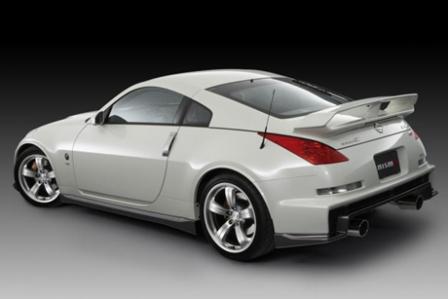
2011 Nissan 370Z NISMO


2011 Nissan 370Z NISMO
To appease these buyers, Nissan has given the 370Z its NISMO treatment.
NISMO EDITION INCLUDES A LONG LIST OF UPGRADES
For those looking for a little more sport from their Z, Nissan buyers can step up to the NISMO package, which adds 19-inch wheels, a NISMO-tuned exhaust, a sports suspension and an additional 18 horsepower to the 3.7-liter V6 for a total of 350.

The six-speed manual transmission—which is the only available transmission—also comes with Nissan’s SyncroRev Match, which uses computer wizardry to match engine and transmission revolutions while downshifting, thus negating the need for heel-and-toe shifting.

There are other tweaks that make a NISMO a NISMO. The tuned suspension consists of new, stiffer springs with “high-response” shock absorbers, as well as NISMO strut tower bars at the front and rear.

On the track, the NISMO feels somewhat like an American muscle car. Again, this isn’t a luxury car. Mitsubishi’s Eclipse doesn’t have the guts to keep up with the NISMO Z, and the Ford Mustang/Dodge Challenger/Chevrolet Camaro pony car trio play among a different market segment, all though all three match up fairly well performance-wise.

The six-speed manual features Nissan's new "SynchroRev Match" function, the world's first synchronized downshift rev matching manual transmission system. The Nismo's suspension is tuned for a firmer ride and sharper handling. Compared to a standard 370Z Coupe, front spring rates have been dialed up 15 percent, rear spring rates 10 percent, front stabilizer bar rate upped 15 percent, and the rear stabilizer bar is 50 percent stiffer. The Nissan NISMO 370Z rides on unique 5-spoke Nissan-branded 19-inch RAYS forged aluminum-alloy wheels (19x9.5-inch front, 19x10.5-inch rear) mounted with Yokohama ADVAN Sport Y-rated high-performance tires (P245/40ZR19 front, P285/35ZR19 rear).

Bringing the NISMO 370Z to a stop are standard NISMO Sport Brakes with large diameter 14.0-inch front and 13.8-inch rear vented rotors with 4-piston front and 2- piston rear aluminum calipers.

Developed by Nissan’s Specialty Vehicles Group in conjunction with Autech Japan, Nissan’s longstanding conversion partner, the limited production Nissan NISMO 370Z provides unique performance and design attributes that true sports car enthusiasts are looking for straight from the factory.

Advanced VVEL V6 and Tuned Suspension Come Standard
Every NISMO 370Z starts with the unmatched foundation of an advanced Nissan FM (Front Midship) platform, refined 4-wheel independent suspension and 3.7-liter DOHC V6 engine with Variable Valve Event and Lift Control (VVEL). The NISMO 370Z is offered with only one transmission, a close-ratio 6-speed manual with Nissan’s “SynchroRev Match” synchronized downshift rev matching system.

Friday, April 15, 2011

2011 Nissan Xterra Reviews

2011 Nissan Xterra Reviews
the Nissan Xterra is an excellent off-road SUV. Though it isn’t as comfortable as car-based crossover SUVs, test drivers claim that the Xterra has a more refined on-road demeanor than many other off-road SUVs. “The 2011 Nissan Xterra is the one most easy to live with."
For 2011, the Nissan Xterra's Off-Road trim level has been renamed Pro-4X, while the SE trim level has been dropped.

The 2011 Nissan Xterra is the one most easy to live with.
To go along with the Xterra's tough-guy appearance, you'll find sturdy body-on-frame construction, a burly V6, tall ground clearance and an available four-wheel-drive system with low-range gearing. The premium Pro-4X trim further bolsters the Xterra's off-highway credentials with skid plates, a driver-selectable locking rear differential, hill descent control and roof-mounted lights.

Body Styles, Trim Levels, and Options
The 2011 Nissan Xterra is a five-passenger, four-door SUV available with rear- and four-wheel drive. The Xterra X comes standard with 16-inch steel wheels, privacy glass, keyless entry, power locks and mirrors, cruise control, air-conditioning, tilt-only steering wheel, and a six-speaker CD sound system. The Xterra S gains 16-inch alloy wheels, off-road tires, a height-adjustable driver seat with lumbar control, a first aid kit and a cargo organization system. The Pro-4X adds an electronic locking rear differential, hill-start assist, hill-descent control, skid plates, different 16-inch alloy wheels, upgraded off-road tires, foglamps, roof-mounted off-road lights, unique cloth upholstery, a fold-flat passenger seat, a leather-wrapped steering wheel, white-face gauges, an auto-dimming rearview mirror (with built-in compass), Bluetooth and a nine-speaker Rockford Fosgate sound system with a six-CD changer, auxiliary audio jack, steering-wheel audio controls and satellite radio (with automatic transmission only). The Pro-4X Leather package adds leather upholstery and a passenger seat back pocket, but deletes the passenger seat's flat-folding capability.
Rear-wheel drive is standard on all but the Pro-4X, while the available four-wheel-drive system features a multimode transfer case with low-range gearing.
In Edmunds performance testing, an Xterra 4x4 with an automatic transmission went from zero to 60 mph in 8 seconds. The rear-drive Xterra returns an EPA-estimated 15 mpg city/21 mpg highway and 17 mpg combined.

Safety
The 2011 Nissan Xterra is equipped with antilock disc brakes, stability control, front-seat side airbags and side curtain airbags. Xterra Pro-4X models also come with hill-descent control and hill-start assist. The Nissan Xterra has not been rated using the government's new, more strenuous 2011 crash testing procedures. The Xterra's interior controls are easy to use and reach.

Driving Impressions
Thanks to the 2011 Nissan Xterra's powerful V6, performance is sure to satisfy. On the road, the Xterra maneuvers confidently with precise steering and relatively minimal body roll.
The Xterra is built on the Frontier pickup's platform, with a solid axle and leaf springs in back but a multilink setup in front for more responsive handling. All four Xterra models are available in four-wheel drive, and all but the Off-Road edition are available with rear-wheel drive. The available four-wheel-drive system is a part-time, off-road-oriented setup, with high and low ranges. The Xterra is offered in three different trim levels: including X, S, and off-road-focused PRO-4X models. PRO-4X models add 16-inch off-road wheels and tires, Bilstein shocks with off-road tuning, a locking differential (with 4x4), and skid plates. Automatic-transmission Xterras also include Hill Descent Control and Hill Start Assist.

An in-dash navigation system remains unavailable in the Xterra, but a Bluetooth hands-free phone setup is standard, and PRO-4X models include a Rockford Fosgate premium audio system with auxiliary input, an in-dash 6-CD changer, 8 speakers, a subwoofer, steering wheel audio controls, and XM Satellite Radio.2011 Nissan Xterra

Friday, April 1, 2011

2011 Nissan Altima Hybrid is an ideal hybrid sedan

Nissan Altima Hybrid
2011 Nissan Altima Hybrid Reviews

Altima Hybrid is licensed from Toyota’s Hybrid Technology. Hybrid model is unchanged for this year’s model. 2011 Nissan Altima Hybrid model is available in single trim level. Nissan Altima Hybrid model can be offered with three packages. Packages offered with this model include Convenient Package, Premium Package and Technology Package.

Convenient Package include foldable side view mirrors, eight way power adjustable driver seats, automatic headlights, leather wrapped steering column, rear spoilers, outside rear view mirrors integrated with turn signals and steering wheel with audio controls mounted on it.

In a growing class, the 2011 Nissan Altima Hybrid is easily overlooked because of its low fuel economy ratings, limited availability and expensive optional packages.

In theory, the 2011 Nissan Altima Hybrid is an ideal hybrid sedan. Second, the Altima Hybrid has great fuel economy ratings if you compare it to gasoline cars. However, once you look at competing hybrids like the Ford Fusion Hybrid and the Toyota Prius, the Altima’s ratings aren’t impressive. "The 2011 Nissan Altima Hybrid is a solid hybrid family sedan that also happens to be relatively sporty to drive,” says Edmunds. The 2011 Nissan Altima Hybrid’s main competitors are the Toyota Prius, Ford Fusion Hybrid and the Toyota Camry Hybrid, each of which bring one or more of these strengths to the table: excellent fuel economy, value, comfort and strong performance.

Nissan has been somewhat hobbled by the fact that its mid-size Altima hybrid sedan utilizes many hybrid parts courtesy of Toyota, which have so far restricted the car’s availability and also profitability.

Other somber exterior colors, such as Navy Blue, Ocean Grey, Dark Slate, Winter Frost, Super Black and (this is a good one) Radiant Silver, help cement this car’s persona as sensible and safe. That said, the Hybrid version appears somewhat out of place compared to its sportier siblings, the Altima sedan and coupe. The Altima Hybrid comes with a standard 6.5-inch centrally mounted touch screen and hard drive navigation system as part of the Technology Package.
Back seat space is decent, with ample legroom (35.8 inches, versus 44.1-in up front).

The powertrain consists of Nissan’s 2.5-liter QR25 four-cylinder, twin cam engine that boasts continuous variable valve timing and electronic throttle control, teamed with an electric motor and a Hybrid Vehicle Electric Control Unit (HV-ECU) that works in conjunction with a Continuously Variable Transmission to provide drive to the wheels.

Unlike Honda’s hybrids, but like the Toyota Prius, the Altima is a true hybrid – the torque produced from the electric motor at zero rpm gives sufficient thrust to move the car at low speeds without assistance of the gasoline engine. For the Hybrid, it’s rated at 158 horsepower at 5200-6000 rpm and 162 ft-lbs of torque. The latter figure is reached at a relatively low 2800 rpm, providing lively mid-range acceleration. Nissan claims that the Altima Hybrid can go around 600 miles between fill ups and EPA fuel economy ratings are 33-mpg city and 35-mpg highway. During our time with the Altima Hybrid, we put it through multiple 120 mile round trips, much of it through city driving, and the difference in fuel consumption was quite noticeable with visits to the pump almost halved. Still, when compared to newer and more advanced hybrids like the Ford Fusion and Hyundai Sonata, the fuel economy is less than impressive.

Although the Altima Hybrid doesn’t exactly scream ‘enthusiast,’ the chassis and suspension tuning are definitely biased toward the tauter side of comfort. The ride is fairly firm, even with the 16-inch wheels and high profile 60 series tires, while pushing the car through the turns reveals surprisingly neutral handling for a front driver. Standard Vehicle Stability Control also helps. The Altima Hybrid sports four-wheel disc brakes with standard ABS and features regenerative braking, a feature common to other hybrid cars. For 2011 the Altima Hybrid’s price remains unchanged at $26,780 for a single, decently equipped model. Given the high profile status that hybrids currently enjoy, the Altima Hybrid seems to have been lost in the shadows almost since the day it was introduced.

Sunday, March 20, 2011

2011 Nissan Cube review

Nissan Cube
The Nissan Cube is hard to pigeonhole. As part city-friendly microvan, part tall compact wagon, and part utility vehicle, it's unrivaled in style and packaging. The 2011 Nissan Cube is an oddity, no doubt. Like the Scion xB, the Cube has a boxy design with rounded corners everywhere, but with its asymmetry and flared sheetmetal for the wheel wells and rear fascia, the Cube is far more distinctive than the xB. All Cube models come with a 122-horsepower, 1.8-liter four-cylinder engine, powering the front wheels.

The Cube's interior is actually more spacious for passengers than the exterior design suggests. Cargo-wise, the Nissan Cube isn't quite as stellar. The top Kr?m model gives the 2011 Nissan Cube a dressed-up appearance—including a roof spoiler, a chrome grille with horizontal bars, bright painted alloy wheels, interior accent lighting, aluminum pedals, and a different front and rear fascia, plus various extras, such as Bluetooth, steering-wheel audio controls, and a Rockford Fosgate subwoofer.

Despite its somewhat boxy shape, the 2011 Nissan Cube is surprisingly nimble on the road. As fun as the Cube is to drive, though, it comes at a price: noise. Road noise in the 2011 Cube, especially when on the freeway, is practically unbearable.

The 2011 Nissan Cube’s 1.8-liter 4-cylinder engine is capable of 122 horsepower and 127 pound-feet of torque. The most affordable version of the Cube comes with a six-speed manual transmission. Higher trims have an optional continuously variable transmission, or CVT, available. Cubes with manual transmissions get fuel economy ratings of 24/29/26. Cubes with the CVT get fuel economy ratings of 28/30/29.

A navigation system is available for the 2011 Cube, though, which is sure to win some drivers over. Visibility is exceptional, making for a safe driving experience.

The Nissan Cube is unusual looking, which is a big part of its attraction to drivers.--There are two main advantages to the 2011 Nissan Cube: fun and affordability. This car is definitely geared towards young drivers; its unique styling isn’t going to appeal to everyone. Nimble handling and fairly good gas mileage are also perks of driving the Cube. Zipping around in this eye-catching car is definitely an experience.
Without a doubt, the 2011 Nissan Cube’s unique styling is one of its biggest downfalls.

The 2011 Nissan Cube remains an eccentrically styled four-door wagon with surprising room for four big adults. hould you buy the 2011 Nissan Cube or wait for a 2012 Nissan Cube? The Nissan Versa that donates its underskin engineering to the Cube is set to be fully redesigned for model-year 2012 or 2013, but the Cube isn’t likely to change until a model-year or two after Versa’s redesign.

The 2011 Nissan Cube styling continues with the same blend of cute and weird it debuted with for model-year 2009. The 2011 Nissan Cube is offered in four models, labeled 1.8, 1.8 S, 1.8 SL, and 1.8 Krōm Edition. Cube 1.8 and 1.8 S models come with 15-inch tires with wheel covers; 1.8 SL and 1.8 Krōm Edition models come with 16-inch alloys. Mechanical: The 2011 Nissan Cube carries over mechanically unchanged. In contrast to its funky image, Cube is quite orthodox mechanically. Based on the Versa’s proven platform and powertrain, the Cube has front-wheel drive, a beam rear axle, and rear drum brakes.

Standard on every 2011 Nissan Cube are antilock brakes with brake assist, plus traction-control and antiskid systems. Seat mounted front side airbags and head-protecting curtain side airbags for both seating rows are likewise included.

The 2011 Nissan Cube is fun to drive, with lively acceleration and an impressively absorbent ride. Features: The 2011 Nissan Cube comes reasonably well equipped with amenities like air conditioning, power windows, mirrors, and locks, remote keyless entry, and an intermittent rear wiper.

Wednesday, March 16, 2011

2011 Nissan Frontier


2011 Nissan Frontier Review
2011 Nissan Frontier is small truck that are able to carry the real dirty work. Especially because the border is a rare species: a small-scale truck with large transport capacity.

For example, Nissan does not offer a V8 for the border, which means you can watch his big brother, the Nissan Titan, or consider the big trucks from Ford, Chevrolet or Toyota. If you want a small truck that can carry a large truck, the border is the truck for you.

the Nissan Frontier has interior features and safety scores that impress. If you need utility, but want a truck that goes beyond the basics, shop the Nissan Frontier.

While reviewers like the Frontier overall, there are a few complaints. Critics don’t like the Frontier’s interior materials.

Nothing really proves that the Frontier is a nice truck better than the Suzuki Equator. The two trucks are virtually identical: Suzuki contracted Nissan to build the Equator.

The 2011 Nissan Frontier has two cab styles, though both have four doorsQuite simply, the 2011 Nissan Frontier does an awful lot of things well.

The 2011 Nissan Frontier is a compact pickup truck that's offered in an extended cab (King Cab in Nissan-speak) with a pair of flip-down seats in back, and a crew cab with a full 60/40-split-folding three-person bench. A 6-foot cargo bed is standard on King Cab models, while Crew Cab buyers have a choice of a standard 5-foot bed or an optional 6-foot version.

Now the base S model is complemented by the midrange SV, off-road-oriented PRO-4X and the top-of-the-line SL (crew cab only).

Stepping up to the SV trim level adds 16-inch steel wheels with the inline-4 engine and alloy wheels with the V6, plus upgraded tires, a chrome front bumper, a sliding rear window, keyless entry, cruise control, full power accessories, upgraded cloth upholstery and a tilt-adjustable steering wheel. For those planning on taking the road less traveled, there's the PRO-4X, which features 16-inch alloy wheels with off-road tires, a body-color grille, foglights, a locking rear differential, Bilstein off-road shocks, underbody skid plates and spray-in bedliner with Utili-Track tie-downs. The PRO-4X Luxury package adds a sunroof, roof racks and cross bars, leather upholstery, heated power front seats (eight-way driver, four-way passenger), heated mirrors and a rear center armrest.

Additional standard features include 18-inch alloy wheels, automatic headlights and side steps for easier cab access.

The 2011 Nissan Frontier is available with two engines. Rear-wheel drive is mandatory. EPA-estimated fuel economy is 19 mpg city/23 mpg highway and 21 mpg combined with the manual transmission, and 17/22/19 with the automatic.

Optional for the SV extended cab and standard for all PRO-4X and crew cab models is a 4.0-liter V6 that produces 261 hp and 281 lb-ft of torque. The S, SV and PRO-4X 4x4 can be equipped with either a standard six-speed manual or optional five-speed automatic, while the PRO-4X 4x2 and SL are automatic only.

The V6 comes with rear-wheel drive or four-wheel drive. In Edmunds performance testing, a V6-powered PRO-4X Crew Cab went from zero to 60 mph in 8.3 seconds.

Every 2011 Nissan Frontier comes standard with antilock disc brakes, stability control, front-seat side airbags and side curtain airbags. In Edmunds brake testing, a Frontier PRO-4X came to a stop from 60 mph in 128 feet -- impressive for a truck.

The Frontier Crew Cab earned just four stars in these same tests. Both scored a perfect five stars in side-impact tests, although the King Cab was not tested for rear side protection. King Cab models feature reverse-opening rear doors that offer access to a pair of fold-up jump seats behind the front buckets.

Saturday, March 12, 2011

2011 Nissan Murano announced


Here we provide 2011 Nissan Murano specifications,features and overviews.You will have to get a full and detailed structure of 2011 Nissan Murano.TOP SPEED have been equipped with some rare and High resolution wallpapers of the 2011 Nissan Murano.2011 Nissan Murano price may be very with Addition of extra segments.Click each 2011 Nissan Murano wallpapers form gallery and get high quality-high resolution wallpapers.

The 2011 Nissan Murano arrangement gains a new sleek level as well as a convertible body style. This midsize SUV shares main component of its basic design with the Nissan Altima sedan. Murano's roster embrace S, new-for-2011 SV, SL, and LE. Also new for 2011 is the Murano Cross Cabriolet, a 2-door convertible with a power soft top. It comes in a single trim level with features similar to a fully furnished LE. Wagon models have 5-passenger seating while the convertible seats 4. All use a 265-horsepower 3.5-liter V6 engine and a ceaselessly variable transmission that behaves much like an automatic. Maximum drag capacity is 3,500 pounds.

All wagons offer front-wheel drive or all-wheel drive. The Cross Cabriolet is AWD only. Available safety describe include ABS, traction control, antiskid system, front-side airbags, and curtain-side airbags. Keyless entry/engine start are standard on all. Standard on the SL and LE are leather upholstery and warmed front seats. A rearview camera is standard on all but the S. A hard drive for storing digital-music files is standard on the SL and LE; its capacity is 2 gigabytes without navigation and 9.3 gigabytes with it. The navigation system is optional on the SL and LE and standard on the Cross Cabriolet.

Model Prices

Trim Name Retail Price Dealer Invoice Destination Charge
2WD 4dr S $28,520 $26,277 $810
2WD 4dr LE $37,560 $34,591 $810
2WD 4dr SL $35,470 $32,668 $810
2WD 4dr SV $31,930 $29,412 $810
AWD 4dr LE $39,160 $36,062 $810
AWD 4dr S $30,120 $27,749 $810
AWD 4dr SL $37,070 $34,140 $810
AWD 4dr SV $33,530 $30,884 $810

Tags:2011 Nissan Murano parts,2011 Nissan Murano overview,2011 Nissan Murano specifications,2011 Nissan Murano highspeed,2011 Nissan Murano colours,2011 Nissan Murano prices,2011 Nissan Murano wallpapers,2011 Nissan Murano mileage,2011 Nissan Murano pictures,2011 Nissan Murano review, 2011 Nissan Murano user's view, 2011 Nissan Murano interior details, 2011 Nissan Murano exterior details,2011 Nissan Murano launch date,2011 Nissan Murano specs,2

Friday, March 11, 2011

2011 Nissan 370Z coupe


Style, power and impressive handling make the Nissan 370Z a tough competitor in the affordable sports car class.
Available as a coupe or a roadster, reviewers agree that it is the Z is a lot of car for the money, although its price does approach that of luxury sports cars.

Consumers on the hunt for an affordable sports car should check out the Hyundai Genesis Coupe and the Ford Mustang. The rear seats of the Mustang aren’t recommended for adults, but with 13.4 cubic feet of cargo space the Mustang nearly doubles the space available in the 370Z. Opt for the GT trim, and the Mustang will match the 370Z’s straight line performance, while offering nimble handling by muscle car standards.

The 2011 Nissan 370Z is available as a coupe or a roadster and in three available trims: base, Touring and Nismo.

The interior has been fitted with a Nissan Hard Drive Navigation System with 7-inch VGA touch-sensitive display, 9.3GB HDD Music Box, USB connectivity and iPod connection, XM NavTraffic with Real-Time Traffic Information, RearView Monitor, automatic phonebook download which would work with select phones only and Bluetooth Streaming Audio, Bluetooth Hands-free Phone System, and standard Nissan Intelligent Key.
The body structure was extensively revised for this generation design, improving front body torsion rigidity by 30 percent and adding a front suspension cradle to help reduce front body lateral bending, rear structural reinforcements, and an underbody “V-bar” to help reduce rear lateral bending.

Performance body pieces are available as part of the optional Sport Package, including a front chin spoiler and rear spoiler. The operation layer includes the steering wheel, shifter and switchgear.

The sporty woven cloth seats feature standard 8-way driver’s/4-way passenger manual adjustments, with heated 4-way power-adjustable leather-appointed seats standard with the 370Z Touring model. Adjustable front seat Active Head Restraints are also standard. The interior features standard Black cloth. The 370Z Touring model adds standard 4-way power adjustable heated leather-appointed and synthetic suede sport seats with adjustable lumbar support, 6CD Bose audio system with eight speakers (includes dual subwoofer) and MP3/WMA playback, XM Satellite Radio (XM subscription required, sold separately), Bluetooth Hands-free Phone System, HomeLink Universal Transceiver, auto-dimming mirror, aluminum-trimmed pedals and retractable cargo cover.

The engine is backed by a choice of two advanced transmissions, both designed to improve driver performance. The close-ratio 6-speed manual includes an available synchronized downshift rev matching system, which allows drivers of any skill level to experience professional-like gear shift performance. The SynchroRev Match system is offered as part of the optional Sport Package.

The 7-speed’s wide gear ratios offer improved fuel efficiency (versus a 5-speed automatic), while the Adaptive Shift Control is designed to adjust to the driver’s driving style.

The standard 370Z wheel and tire package features 18×8.0-inch front/18×9.0-inch 5-spoke lightweight aluminum-alloy wheels with P225/50R18 front/P245/45R18 rear Yokohama ADVAN Sport high performance summer tires. The optional Sport Package includes Nissan Sport Brakes with large diameter 14.0-inch front and 13.8-inch rear rotors (versus 12.6-inch front/ rear standard rotors) with 4-piston front and 2-piston rear aluminum calipers.

Steering is provided by a vehicle-speed-sensitive power-assisted rack-and-pinion design that provides improved response. Vehicle Dynamic Control (VDC) is standard.

The 2011 Nissan 370Z’s long list of standard safety and security features includes the Nissan Advanced Air Bag System (AABS) with dual-stage supplemental front air bags with seat belt sensors and occupant classification sensor; front seat-mounted side impact supplemental air bags; roof-mounted side-impact air bags; seat belts with pretensioners and load limiters, Active Head Restraints, Zone Body Construction with front and rear crumple zones, Nissan Vehicle Immobilizer System, Vehicle Security System and Tire Pressure Monitoring System (TPMS).

The optional Sport Package features 19-inch RAYS forged wheels and Bridgestone Potenza tires, aerodynamic front and rear spoiler, larger Nissan Sport Brakes, SynchroRev Match (6-speed manual transmission only) and Viscous Limited Slip Differential (VLSD).

The Nissan Hard Drive Navigation System features a 7-inch VGA touch-sensitive display, 9.3GB HDD Music Box, USB connectivity and iPod connection, XM NavTraffic with Real-Time Traffic Information and XM NavWeather (XM subscription required, sold separately), automatic phonebook download (select phones) and Bluetooth Streaming Audio.

Thursday, March 10, 2011

2011 nissan gt-r reviews

2011 nissan gt-r
The 2011 Nissan GT-R .While the base trim has been discontinued, the Nissan GT-R Premium receives a mild refresh. Autoblog writes, "The illustrious Nissan GT-R is, quite possibly, one of our favorite cars currently in production."

Given the GT-R’s 2011 upgrades, shoppers should expect a slightly steeper sticker price. The 2011 Nissan GT-R, however, provides more cargo room -- enhancing its practicality. Higher-end trims of the 911 also cost substantially more than the 2011 Nissan GT-R.

For 2011, Nissan has dropped the GT-R’s base trim and added more standard features to the GT-R Premium. Be sure to check for current Nissan deals that may be available on a new Nissan GT-R.

In Nissan's case, the 2011 GT-R showcases how stratospheric performance can be achieved through high technology while still allowing a relative bargain in the supercar realm.

Now in its third year, the 2011 Nissan GT-R continues to be one of the most breathtaking performance cars available. What remains of our gripes is the lack of a traditional manual transmission and the GT-R's relative heft when compared to other high-performance cars.

Even so, no similarly priced car can challenge the GT-R for its all-around dominance. It's only when you start looking at cars like the Porsche 911 GT3 that you'll find the GT-R outclassed, but at that point the price of entry is considerably higher. In the end, the 2011 Nissan GT-R remains one of the smartest supercar purchases in recent memory.

The 2011 Nissan GT-R is a high-performance sport coupe with a 2+2 seating layout. Standard features include 20-inch alloy wheels shod with high-performance tires, automatic xenon headlights, Brembo brakes, an electronically adjustable suspension, leather/faux suede upholstery, heated power-adjustable front seats, Bluetooth, keyless ignition/entry, automatic climate control and an 11-speaker Bose CD/MP3 audio system with two subwoofers, satellite radio, iPod connectivity and Bluetooth streaming audio.

The Nissan GT-R is powered by a 3.8-liter twin-turbocharged V6 engine that generates 485 hp and 434 pound-feet of torque. A six-speed dual-clutch automated manual transmission routes this power to the ground via an advanced all-wheel-drive system. In testing, we've timed the GT-R from zero to 60 mph in 3.6 seconds. Standard safety features on the GT-R include massive antilock Brembo brakes, stability control and traction control. Front-seat side airbags and full-length side curtain airbags are also included. In brake testing, we've recorded a best 60-0 mph stopping distance of 98 feet, which ranks among the shortest distances we've ever seen.

The 2011 Nissan GT-R's cabin conveys a mix of performance, technology and seriousness.
Nearly everything about the Nissan GT-R exudes an aura of high-performance through high-technology. On serpentine roads or racetracks, the GT-R is a marvel of handling dynamics. Road noise can be intrusive at times, but we think it's a small price to pay for the 2011 Nissan GT-R's otherworldly performance.

GT-R is a sports sedan manufactured by Nissan. This sedan has bagged many awards like Super car of the year 2007 from Top Gear, 2008 Driver’s Car of the year from Autocar, 2009 Automobile of the year from Automobile Magazine, Car of the Year 2008 from EVO Magazine and 2009 Motor Trend car of the year from Motor Trend. Nissan GT-R is one of the smartest super cars to drive and to own.
2011 Nissan GT-R is a high performance coupe sedan available with 2+2 seating arrangement.

Friday, March 4, 2011

Nissan Pathfinder, 2010

Nissan Pathfinder, 2010


Europe's best selling pick-up and its SUV sibling since its launch - the Nissan Navara and Nissan Pathfinder - have been given a mid-term boost with a number of significant enhancements designed to keep them at the top.

New V6 diesel engine
The new direct injection V6 turbodiesel has been developed by the Renault Nissan Alliance to deliver high levels of performance with strong economy, competitive emissions and class-leading refinement.

The key element of the new V6 - with an unusual vee angle of 65 degrees - is the material chosen for the engine block. Alliance development engineers chose Compacted Graphite Iron (CGI), a material that offers all the benefits of cast iron, including high levels of stiffness and noise absorption, without the weight penalty. And while CGI is heavier than a pure alloy block there is no need to add stiffening ribs or extra sound deadening material so the weight gain is comparatively modest.

The compression ratio has been lowered to 16:1 to benefit not just economy and emissions but also noise, vibration and harshness (NVH), while internal engine friction is reduced by the use of ultra smooth components such as the micro-finished forged steel used for the crankshaft.

Class leading levels of torque and highly competitive specific power outputs are delivered thanks to the adoption of a comparatively large single turbocharger, which is mounted within the vee of the engine, an intercooler, and the use of the latest generation of Bosch common-rail fuel injection. This system incorporates piezo injectors and operates at 1800 bar.

Power output is 170 kW (231PS) while the torque output of 550 Nm leads the class. Better still, peak torque is achieved from as low as 1,700 rpm and is available all the way to 2,500 rpm, while as much as 500 Nm is available from a mere 1,500 rpm. Idle speed is an exceptionally low 650 rpm with none of the vibrations and noise usually associated with a diesel.

The result is strong low-end performance with comfortably refined delivery and exemplary throttle response. In addition, the engine helps provide strong towing performance, the Nissan Pathfinder capable of towing a 3500 kg braked trailer with Nissan Navara having a 3000 kg limit.

Emissions and fuel efficiency targets included achieving Euro 5 compliance. In addition to the gains made by the changes to the combustion chamber, the V9X engine also incorporates a number of innovative features.

Among these is the adoption of an overcooled Exhaust Gas Recirculation (EGR) system which reduces NOx emissions. The system incorporates an integrated exhaust gas bypass in the EGR cooler which quickly helps to achieve the optimum temperature after start up so that the full cooling capacity can be used. This features a low temperature water circuit for the EGR cooler to reduce still further the temperature of the exhaust gas and lower carbon monoxide and hydro carbon emissions.

Equally significant is the treatment of the tailpipe emissions. The system comprises a metallic oxidation catalytic converter offering lower pressure loss compared to a ceramic system and an exothermic catalyst and a catalytic diesel particulate filter (DPF) in the same container. The latter arrangement works in conjunction with a seventh fuel injector which is positioned in the exhaust.

This is activated while the particulate filter is being regenerated - a process of which the driver is completely unaware - but significantly means the opportunity for unburnt fuel to pollute the engine oil is removed. It also allows the filter to be regenerated in low-load conditions, such as idling, and therefore achieves a high efficiency level under all driving conditions. It also helps stretch oil change intervals to 20,000 kms.

Improved 2.5 four-cylinder dCi
The existing 2.5 dCi four cylinder engine hasn't been forgotten, however, and significant improvements will cement its position as the most popular engine in the range with improvements to both overall refinement and all aspects of its performance.

Exterior changes
The revised models have been given a new look front and rear to differentiate them from their predecessors. Changes at the front include a new bonnet, revised grille and a new bumper assembly. Adding 80mm to the length of both models, the bumper is more rounded and lends a more sporting touch to the cars.

There's a new headlamp design with distinctive projector styling where Xenon lamps are fitted (Nissan Pathfinder only). Headlamps washers now pop-up from beneath body colour moulding in the bumpers. There's a new 18 inch alloy wheel to complement the existing range of 16 inch (steel and alloy) and 17 inch (alloy) designs. V6 models, meanwhile, are given a discreet V6 badge at the leading edge of both front doors while V6 Nissan Pathfinder also gain a new side moulding across the doors.

Changes at the rear of Nissan Pathfinder include a new bumper design with squared off edges to give a larger and lower mass for a more stable, tougher appearance.

The existing colour palette is changed to include two new metallic shades for Nissan Navara - Electric Blue and Blue Grey - while Blue Grey is added to Nissan Pathfinder's portfolio.

Interior changes
Most of the changes inside the cabin of both Nissan Navara and Pathfinder have been designed to boost quality and include new switchgear, revised door trims, new seat fabric, the addition of chrome highlights, revised dials and, depending on the model, the availability of Nissan Connect Premium with a new high resolution touch screen.

Typical of the attention to detail that has helped enhance quality are the door trims which have been changed to improve both the look and feel of the interior and its practicality. The armrests and door pads are more tactile to the touch and their shape has also been altered to make them more comfortable in use.

As well as improving fit and finish, the material used has also been enhanced. Practical touches mean the storage bins can now happily hold an A3 map book as well as a one-litre bottle. The rear door storage bins are now large enough to hold a standard Nissan First Aid kit.

Equipment improvements include a new Speed Limiter, which is incorporated into the existing cruise control system.
Active safety is improved with the availability of Nissan's Electronic Stability Programme (ESP) on Nissan Navara (already available on Pathfinder) which uses sensors to monitor the engine's ECU, wheel speed, steering angle, plus longitudinal and lateral G and yaw rates to anticipate and control wheel slippage.

Nissan Pathfinder, 2010

Nissan Pathfinder, 2010


Europe's best selling pick-up and its SUV sibling since its launch - the Nissan Navara and Nissan Pathfinder - have been given a mid-term boost with a number of significant enhancements designed to keep them at the top.

New V6 diesel engine
The new direct injection V6 turbodiesel has been developed by the Renault Nissan Alliance to deliver high levels of performance with strong economy, competitive emissions and class-leading refinement.

The key element of the new V6 - with an unusual vee angle of 65 degrees - is the material chosen for the engine block. Alliance development engineers chose Compacted Graphite Iron (CGI), a material that offers all the benefits of cast iron, including high levels of stiffness and noise absorption, without the weight penalty. And while CGI is heavier than a pure alloy block there is no need to add stiffening ribs or extra sound deadening material so the weight gain is comparatively modest.

The compression ratio has been lowered to 16:1 to benefit not just economy and emissions but also noise, vibration and harshness (NVH), while internal engine friction is reduced by the use of ultra smooth components such as the micro-finished forged steel used for the crankshaft.

Class leading levels of torque and highly competitive specific power outputs are delivered thanks to the adoption of a comparatively large single turbocharger, which is mounted within the vee of the engine, an intercooler, and the use of the latest generation of Bosch common-rail fuel injection. This system incorporates piezo injectors and operates at 1800 bar.

Power output is 170 kW (231PS) while the torque output of 550 Nm leads the class. Better still, peak torque is achieved from as low as 1,700 rpm and is available all the way to 2,500 rpm, while as much as 500 Nm is available from a mere 1,500 rpm. Idle speed is an exceptionally low 650 rpm with none of the vibrations and noise usually associated with a diesel.

The result is strong low-end performance with comfortably refined delivery and exemplary throttle response. In addition, the engine helps provide strong towing performance, the Nissan Pathfinder capable of towing a 3500 kg braked trailer with Nissan Navara having a 3000 kg limit.

Emissions and fuel efficiency targets included achieving Euro 5 compliance. In addition to the gains made by the changes to the combustion chamber, the V9X engine also incorporates a number of innovative features.

Among these is the adoption of an overcooled Exhaust Gas Recirculation (EGR) system which reduces NOx emissions. The system incorporates an integrated exhaust gas bypass in the EGR cooler which quickly helps to achieve the optimum temperature after start up so that the full cooling capacity can be used. This features a low temperature water circuit for the EGR cooler to reduce still further the temperature of the exhaust gas and lower carbon monoxide and hydro carbon emissions.

Equally significant is the treatment of the tailpipe emissions. The system comprises a metallic oxidation catalytic converter offering lower pressure loss compared to a ceramic system and an exothermic catalyst and a catalytic diesel particulate filter (DPF) in the same container. The latter arrangement works in conjunction with a seventh fuel injector which is positioned in the exhaust.

This is activated while the particulate filter is being regenerated - a process of which the driver is completely unaware - but significantly means the opportunity for unburnt fuel to pollute the engine oil is removed. It also allows the filter to be regenerated in low-load conditions, such as idling, and therefore achieves a high efficiency level under all driving conditions. It also helps stretch oil change intervals to 20,000 kms.

Improved 2.5 four-cylinder dCi
The existing 2.5 dCi four cylinder engine hasn't been forgotten, however, and significant improvements will cement its position as the most popular engine in the range with improvements to both overall refinement and all aspects of its performance.

Exterior changes
The revised models have been given a new look front and rear to differentiate them from their predecessors. Changes at the front include a new bonnet, revised grille and a new bumper assembly. Adding 80mm to the length of both models, the bumper is more rounded and lends a more sporting touch to the cars.

There's a new headlamp design with distinctive projector styling where Xenon lamps are fitted (Nissan Pathfinder only). Headlamps washers now pop-up from beneath body colour moulding in the bumpers. There's a new 18 inch alloy wheel to complement the existing range of 16 inch (steel and alloy) and 17 inch (alloy) designs. V6 models, meanwhile, are given a discreet V6 badge at the leading edge of both front doors while V6 Nissan Pathfinder also gain a new side moulding across the doors.

Changes at the rear of Nissan Pathfinder include a new bumper design with squared off edges to give a larger and lower mass for a more stable, tougher appearance.

The existing colour palette is changed to include two new metallic shades for Nissan Navara - Electric Blue and Blue Grey - while Blue Grey is added to Nissan Pathfinder's portfolio.

Interior changes
Most of the changes inside the cabin of both Nissan Navara and Pathfinder have been designed to boost quality and include new switchgear, revised door trims, new seat fabric, the addition of chrome highlights, revised dials and, depending on the model, the availability of Nissan Connect Premium with a new high resolution touch screen.

Typical of the attention to detail that has helped enhance quality are the door trims which have been changed to improve both the look and feel of the interior and its practicality. The armrests and door pads are more tactile to the touch and their shape has also been altered to make them more comfortable in use.

As well as improving fit and finish, the material used has also been enhanced. Practical touches mean the storage bins can now happily hold an A3 map book as well as a one-litre bottle. The rear door storage bins are now large enough to hold a standard Nissan First Aid kit.

Equipment improvements include a new Speed Limiter, which is incorporated into the existing cruise control system.
Active safety is improved with the availability of Nissan's Electronic Stability Programme (ESP) on Nissan Navara (already available on Pathfinder) which uses sensors to monitor the engine's ECU, wheel speed, steering angle, plus longitudinal and lateral G and yaw rates to anticipate and control wheel slippage.

Nissan NV200, 2010

Nissan NV200, 2010


The designed from the outset as both a commercial and a passenger vehicle, the Nissan NV200 brings new levels of space, comfort and practicality to the small van market.

Maximised cargo area
Nissan NV200 uses innovative packaging ideas to create the largest and most practical cargo area in its class. Although a little under 4.4m in overall length, the van version of the Nissan NV200 has a load bay that's more than 2m long (2040mm).

With front-wheel drive and the adoption of a highly compact rear suspension system, the Nissan NV200 can house two standard Euro pallets in the cargo area at a time. At 1.84m high NV200 is no taller than its rivals, while at 520mm from ground level, the floor itself is the lowest in the class to ease loading, helping to boost the cargo volume to 4.1m3. Maximum payload is 771kg.

A spacious interior
A large cargo area is a vital attribute for a van, of course, but the generous interior dimensions of Nissan NV200 also translate into ample passenger space in the Combi version.

Unlike some other manufacturers that fit removable seats - which are invariably heavy to lift and need to be stored elsewhere when not in use - the seats in the Combi stay with the vehicle at all times. The middle row backrest has a 60/40 split to increase versatility and the entire assembly tumbles forward to fold flat against the front seats, while the rear pair fold individually to either side of the load area.
Throughout the creation of Nissan NV200, attention has been paid to ensuring the highest levels of quality with shut lines and panel gaps in line with the expectations of passenger car buyers.

Road car platform
Built on a modified version of Nissan's B Platform, NV200 has fully independent strut type front suspension mounted on a separate subframe and a compact and lightweight yet robust wide leaf spring rear axle.
The performance comes from a choice of two engines, one petrol and one diesel.
The petrol version will be powered by Nissan's renowned all aluminium 1.6-litre HR16 engine, as found in Micra, Note and Qashqai. Displacing 1,598cc, the 16-valve unit develops 79kW (108PS) and 153Nm of torque and is mated to a five-speed manual transmission.

The diesel, found on Note and Micra, is Alliance partner Renault's acclaimed 8-valve 1.5 dCi (K9K) 1,461cc engine. Developing 200 Nm of torque and 63kW (86PS), it offers an ideal blend of performance, refinement and fuel economy. Power is transmitted through a five-speed gearbox.
To create more space in the cockpit, the gearlever extends not from the floor but from the two-tone wrap around centre console. Above the gearlever, the centre section houses the heating and ventilation controls and the double DIN radio slot. Heating and ventilation extends to all three rows of seats.

Well equipped
The Nissan NV200 is availble with an optional rear view parking camera, a first for a van in this segment, while the cabin is full of storage spaces, pockets and cup/bottle holders. There is also a secret storage space large enough to hide camera, mobile phones or vital documents within the upper portion of the glovebox.

Joining the parking camera, other car-like items of standard or optional equipment include features such as Nissan's Intelligent Key, power windows and ESP. Safety equipment includes anti-lock brakes with brake assist (BA) and electronic brakeforce distribution (EBD) as standard. Driver and passenger airbags are also standard with side bags available as an option.

Low cost of ownership
Cost of ownership is projected to be among the lowest in the class thanks in part to the low running costs and high efficiency of the engines and drivetrains, but also thanks to the safety structure which helps to minimise crash damage to vulnerable under bonnet parts such as the radiator.
nit.

Nissan NV200, 2010

Nissan NV200, 2010


The designed from the outset as both a commercial and a passenger vehicle, the Nissan NV200 brings new levels of space, comfort and practicality to the small van market.

Maximised cargo area
Nissan NV200 uses innovative packaging ideas to create the largest and most practical cargo area in its class. Although a little under 4.4m in overall length, the van version of the Nissan NV200 has a load bay that's more than 2m long (2040mm).

With front-wheel drive and the adoption of a highly compact rear suspension system, the Nissan NV200 can house two standard Euro pallets in the cargo area at a time. At 1.84m high NV200 is no taller than its rivals, while at 520mm from ground level, the floor itself is the lowest in the class to ease loading, helping to boost the cargo volume to 4.1m3. Maximum payload is 771kg.

A spacious interior
A large cargo area is a vital attribute for a van, of course, but the generous interior dimensions of Nissan NV200 also translate into ample passenger space in the Combi version.

Unlike some other manufacturers that fit removable seats - which are invariably heavy to lift and need to be stored elsewhere when not in use - the seats in the Combi stay with the vehicle at all times. The middle row backrest has a 60/40 split to increase versatility and the entire assembly tumbles forward to fold flat against the front seats, while the rear pair fold individually to either side of the load area.
Throughout the creation of Nissan NV200, attention has been paid to ensuring the highest levels of quality with shut lines and panel gaps in line with the expectations of passenger car buyers.

Road car platform
Built on a modified version of Nissan's B Platform, NV200 has fully independent strut type front suspension mounted on a separate subframe and a compact and lightweight yet robust wide leaf spring rear axle.
The performance comes from a choice of two engines, one petrol and one diesel.
The petrol version will be powered by Nissan's renowned all aluminium 1.6-litre HR16 engine, as found in Micra, Note and Qashqai. Displacing 1,598cc, the 16-valve unit develops 79kW (108PS) and 153Nm of torque and is mated to a five-speed manual transmission.

The diesel, found on Note and Micra, is Alliance partner Renault's acclaimed 8-valve 1.5 dCi (K9K) 1,461cc engine. Developing 200 Nm of torque and 63kW (86PS), it offers an ideal blend of performance, refinement and fuel economy. Power is transmitted through a five-speed gearbox.
To create more space in the cockpit, the gearlever extends not from the floor but from the two-tone wrap around centre console. Above the gearlever, the centre section houses the heating and ventilation controls and the double DIN radio slot. Heating and ventilation extends to all three rows of seats.

Well equipped
The Nissan NV200 is availble with an optional rear view parking camera, a first for a van in this segment, while the cabin is full of storage spaces, pockets and cup/bottle holders. There is also a secret storage space large enough to hide camera, mobile phones or vital documents within the upper portion of the glovebox.

Joining the parking camera, other car-like items of standard or optional equipment include features such as Nissan's Intelligent Key, power windows and ESP. Safety equipment includes anti-lock brakes with brake assist (BA) and electronic brakeforce distribution (EBD) as standard. Driver and passenger airbags are also standard with side bags available as an option.

Low cost of ownership
Cost of ownership is projected to be among the lowest in the class thanks in part to the low running costs and high efficiency of the engines and drivetrains, but also thanks to the safety structure which helps to minimise crash damage to vulnerable under bonnet parts such as the radiator.
nit.

Nissan Navara, 2010

Nissan Navara, 2010


New V6 diesel engine
The new direct injection V6 turbodiesel has been developed by the Renault Nissan Alliance to deliver high levels of performance with strong economy, competitive emissions and class-leading refinement.

The key element of the new V6 - with an unusual vee angle of 65 degrees - is the material chosen for the engine block. Alliance development engineers chose Compacted Graphite Iron (CGI), a material that offers all the benefits of cast iron, including high levels of stiffness and noise absorption, without the weight penalty. And while CGI is heavier than a pure alloy block there is no need to add stiffening ribs or extra sound deadening material so the weight gain is comparatively modest.

Power output is 170 kW (231PS) while the torque output of 550 Nm leads the class. Better still, peak torque is achieved from as low as 1,700 rpm and is available all the way to 2,500 rpm, while as much as 500 Nm is available from a mere 1,500 rpm. Idle speed is an exceptionally low 650 rpm with none of the vibrations and noise usually associated with a diesel.

Improved 2.5 four-cylinder dCi
The existing 2.5 dCi four cylinder engine hasn't been forgotten, however, and significant improvements will cement its position as the most popular engine in the range with improvements to both overall refinement and all aspects of its performance.

Exterior changes
The revised models have been given a new look front and rear to differentiate them from their predecessors. Changes at the front include a new bonnet, revised grille and a new bumper assembly. Adding 80mm to the length of both models, the bumper is more rounded and lends a more sporting touch to the cars.

Interior changes
Most of the changes inside the cabin of both Nissan Navara and Pathfinder have been designed to boost quality and include new switchgear, revised door trims, new seat fabric, the addition of chrome highlights, revised dials and, depending on the model, the availability of Nissan Connect Premium with a new high resolution touch screen.

Switchgear changes include a new, easier to use, all-wheel drive command control switch on Nissan Pathfinder while the steering wheel controls for the phone and audio are now illuminated. Chrome finishers have been added to the automatic transmission surround and, depending on the model grade, to the instrument binnacle. There's a new storage box on the centre console with a damped lid while SE and LE versions also benefit from 'Fine Vision Meter' dials with a crisper appearance. LE versions of Nissan Pathfinder now have the option of black or light biscuit leather trim.

Equipment improvements include a new Speed Limiter, which is incorporated into the existing cruise control system.

Active safety is improved with the availability of Nissan's Electronic Stability Programme (ESP) on Nissan Navara (already available on Pathfinder) which uses sensors to monitor the engine's ECU, wheel speed, steering angle, plus longitudinal and lateral G and yaw rates to anticipate and control wheel slippage.

Nissan Connect Premium, the brand's new integrated navigation, communication and music system is an optional extra. Simple and quick in use, the 40GB hard drive-based system has a high resolution touch screen with a 3D Birdview display while the map coverage is now extended to Russia, Turkey and Eastern Europe. A new intuitive multi-function controller is fitted and the system also incorporates RDS-TMS live traffic updates and rich content from Michelin.