Showing posts with label Citroen. Show all posts

Friday, July 8, 2011

2011 Citroën DS3 WRC is powered by a four-cylinder

Citroën DS3 WRC
2011 Citroën DS3 WRC is powered by a four-cylinder, 1600cc turbocharged direct injection engine. Designed and built from start to finish by Citroën Racing, this engine develops a healthy 300bhp.
Certified and supplied by Sadev, the six-speed sequential gearbox is coupled with front and rear differentials. Semi-automatic controls and the central differential are now prohibited. Fine-tuned during extensive wind tunnel testing, Citroën DS3 WRC’s bodywork accentuates the curves of the original model. Built using the production body shell, the Citroën DS3 WRC chassis includes a roll cage made of over 40 metres of steel tubing. - Upper attachment points added for the rear McPherson-strut suspension

- Optimisation of the lower suspension attachment points
- Integration of the transmission tunnel and the rear differential
Since DS3 is more compact than C4 WRC, Citroën Racing’s engineers worked on improving the position of each component so as to achieve the best possible balance between the car’s centres of inertia and centres of gravity.

Citroën DS3 WRC uses the same part at the front and the rear, on both the gravel and tarmac versions. Slightly smaller than on C4 WRC in order to comply with the 2011 regulations, the 355mm (tarmac) and 300mm (gravel) brake disks at the front, and the 300mm brake disks at the rear, come with four-piston callipers. A water-cooling system improves the efficiency of the brakes on tarmac.

Drawing on a wealth of experience, DS3 WRC’s onboard electronics are directly derived from the C4 WRC. The multiplexed electrical wiring harness, the powerbox and all electrical controls are designed by Citroën Racing. Citroën Racing has, for example, developed its own bucket seat.
The compact design of Citroën DS3 WRC offers drivers an excellent view of the road. A colour LCD screen located behind the steering wheel shows the key information (engine speed, gear selected). As the main features of the 2011 regulations were not defined until autumn of 2009, the design of Citroën DS3 WRC only really began at that point. Featuring the C4 WRC’s engine with reduced turbo boost, engineers were able to work on the transmission, now stripped of its central differential. Citroën DS3 WRC is set to make its official competitive debut at Rally Sweden (10-13 February), the first round of the 2011 FIA World Rally Championship.

Citroen has unveiled the DS3 WRC rally car at the Paris Auto Show. There will be two teams entering the competition: Sébastien Loeb / Daniel Elena and Sébastien Ogier / Julien Ingrassia. The Citroën DS3 WRC is powered by a 1.6-liter direct-injection turbocharged engine that delivers 300 HP. Rally nevertheless remains a great testing ground for driving new advances in vehicle technology.

Citroën is unleashing an all-new contender for the 2011 World Rally Championship - the Citroën DS3 WRC. Aggressive, dynamic and packed with ‘Créative Technologie’, the DS3 WRC represents the efforts of Citroën Racing to push performance to the limit during its development, whilst complying with the new FIA regulations. After five WRC manufacturer’s and six consecutive driver’s titles for Sébastien Loeb and Daniel Elena, Citroën is out to extend its run of success with the Citroën DS3 WRC.

Citroën DS3 WRC is designed to limit the budgets required to compete in the WRC. Rally nevertheless remains a great testing ground for driving new advances in vehicle technology.

Sunday, June 5, 2011

2011 Citroen C5 Review

2011 Citroen C5
Citroen C5 2011
Available in both Sedan and Tourer shapes, Citroen says that it had sold over 200,000 C5s by May this year. So it’s now time for a mid-life update and that comes in the form of minor exterior changes and additional technological features.

Under the bonnet, Citroen has added e-HDi micro-hybrid technology which combines Stop & Start as well as an electronic gearbox systems with the company’s HDi 110 DPFS diesel engine.
Citroen will also equip the Citroen C5 with a new-generation 2.2-litre HDi engine (the first model to make use of the engine). The Citroen C5 HDi 200 DPFS outputs 150kW at 3,500 rpm and 450Nm from 2,000 rpm.

Updates for this engine is consistent with those used on other units of diesel in the region (4 – cylinder, 1.6 liter and 2 liter, 3 liter V6).

Citroen C5 HDi DPF 200 develops 150 kW EEC (204 bhp) at 3500 rpm and maximum torque of 450 Nm at 2000 rpm. Like the Citroen C5 HDi DPF 240, the new version is distinguished visually polished chrome double exhaust emissions.
The model upgrades apply to both Saloon and Tourer versions and are available from November 2010.

STYLING UPGRADES
The headlamps retain all their existing functionality and the models safety-enhancing cornering lights remain standard specification across the range.
The 2011 Citroen C5 range now benefits from a full Euro 5 compliant engine line-up with the introduction of the 1.6HDi 110hp Euro 5 to replace the Euro 4 version. Combined cycle fuel economy increases from 39.8mpg to 42.2mpg and 38.2mpg to 39.2mpg respectively.
The first year VED for the THP 155 model changes from band H to band G.

CITROEN’S NEW eTOUCH EMERGENCY & ASSISTANCE SYSTEM
Standard specification on all 2011 Citroen C5 facelift Exclusive models, customers now benefit from the introduction of Citroen’s new eTouch Emergency & Assistance System.

Tuesday, February 15, 2011

2011 Citroen C4


UK TV program Fifth Gear has released a new video to the web showing a road test of the new 2011 Citroen C4, the car review is conducted by Vicki Butler-Henderson and she is testing the top of the range 2011 Citroen C4 in the Exclusive trim level thats powered by the 2.0-liter turbo diesel engine.

The "2011 Citroen C4" 2.0 HDi channels its juice to the wheels via a 6-speed manual transmission, and when accelerating from 0 to 62 mph the car needs 8.6 seconds.

Top speed is 126 mph, and in terms of consumption and efficiency the 2011 Citroen C4 2.0 HDi returns 56.6 mpg (combined) and emits 130 grams of CO2 per Km.
Designed to overleap the highest point of expectation, the new Citroën C4 burst with of style, quality, comfort and interior space, makes The Leap a mission possible.

Strength and stability define the car’s profile. Balanced proportions are emphasized through scalped lines finished in high quality. A Citroën C4 driver is a focused driver in a cabin that has an impressive acoustic comfort. Soundproofing delivers a relaxed on-road confidence, crucial for safety driving. Comfortable seating and head room make spacing limits unnoticeable.

Already using familiar technologies, like hill-start assist, EGS (Electronic Gearbox System), warning system when changing lanes, automatic electric parking brake and Xenon directional headlamps with dual-function, the Citroën C4 uses additional new technologies. Together with on-board emergency assistance, Citroën’s eTouch system gives the driver the opportunity to monitor their fuel consumption and driving patterns, also, advice on how to improve fuel usage.

Thursday, February 10, 2011

2012 Citroen DS9


The new 2012 Citroen DS9 is highly dependent on the Metropolis concept and is also known as Lemon Metropolis DS9. Citroen plans to DS9 in the Asian market with force.
Citroen has long been in the shadows of the Germans. The DS9, which is based off of the Metropolis concept, is the company’s attempt to move up market and challenge the Mercedes-Benz S-Class, BMW 7-Series, Jaguar XJ, and the Audi A8.

The name Metropolis was created for a reason. At 5.3 meters long and 2 meters wide, it’s longer than a long-wheelbase Mercedes S-Class and wider than a Maybach.

As you can easily notice, the design language is inspired by the Hypnos concept and was entirely developed by PSA Group’s Shanghai design studio. The rear of the DS9 takes the vehicles overall width and blends it with a stunning aerodynamic line. The Metropolis is powered by a hybrid drive train that combines a 2.0-liter V6 engine with an output of 272bhp and 277lb ft and an electric motor that develops from 55bhp to 95bhp. As stated earlier, the competition for the DS9 will be the larger German sedans, the S-Class, 7-Series, XJ, and the A8. Exterior design is a matter of opinion, but we think the DS9 is stunning.

CITROEN’S gigantic Metropolis limousine concept and the plug-in electric Survolt coupe showcar both appear destined for production, judging by comments made to Britain’s Autocar.

The PSA design boss suggested to Autocar that a Citroen-badged version of the Metropolis, which made its world debut – wearing Citroen’s double-chevron logo - at Expo 2010 Shanghai in China on May 1, would be a lucrative proposition for the company in markets like China.

But he made it clear the production Metropolis could also be sold in Europe – and potentially therefore Australia – as a flagship for Citroen’s new DS sub-brand, badged as the DS9.

“A large, characterful DS flagship model – we could call it a DS9 to reference the original DS19 – could do great things for us.”
At the same time, the low-slung Metropolis, which follows in the footsteps of large Citroen saloons such as the long-wheelbase ‘Presidential’ versions of the legendary DS from the 1960s, is just 1.4 metres tall.

It was powered by the same 185kW electric drive system as the compact concept, which measures 3850mm long, 1870mm wide and 1200mm high

Saturday, January 29, 2011

Citroen REVOLTe Concept, 2009

Citroen REVOLTe Concept, 2009


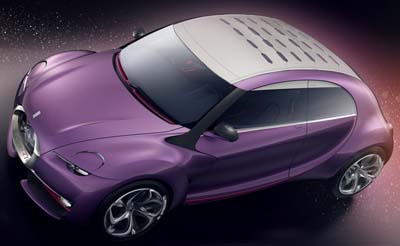
A vibrant and sophisticated re-chargeable hybrid, Citroën REVOLTe Concept represents a bold vision of the luxury, compact city car of tomorrow, combining confident styling with environmentally responsible technology to create a unique concept for the future of urban transportation.

Citroën REVOLTe Concept reflects the changing role of small cars with style and elegance becoming as important as economy and practicality. True to Citroën's credentials as a bold and forward-thinking brand, Citroën REVOLTe Concept snubs the traditions of the conventional small urban vehicle, bringing a highly contemporary approach to the segment.

Inspired by the Citroën 2CV, REVOLTe takes the key attributes of Citroën's timeless and iconic classic and turns them on their head - a clear example of Citroën looking to the future by taking inspiration from its cool past. Where the 2CV was plain and neutral, REVOLTe is luxurious and colourful; where the 2CV was basic and simple, Citroën REVOLTe Concept is intelligent and technologically advanced and where the 2CV was slow and bouncy, REVOLTe is lively and spirited.

Compact, with a visually-stunning low stance, Citroën REVOLTe Concept measures just 3.68m long, 1.73m wide and 1.35m tall. The well defined wheel arches, curving bonnet, forceful lines and sculpted sides that match the roof line, all combine to present a sleek and elegant profile.

Rear-hinged doors provide easy access to the multi-coloured cabin, with woven black leather, thick crimson velvet and gleaming aluminium. REVOLTe's bright colours and luxury styling reflects Citroën's bold creativity and the desire to modernise notions of conventional car design. Thanks to iridescent, glossy colours, silky smooth textiles and sophisticated materials, Citroën REVOLTe Concept has a vibrant, dare-to-be-different interior that throws tradition aside. The result is a small urban vehicle much more like a fashionable, glamorous and clearly feminine accessory to the driver's modern lifestyle.

The original and distinctive three-seater layout - driver's seat to one side with two passenger seats behind it - is designed to resemble a lounge, with the rear seats taking the form of a contemporary sofa. The passenger on the opposite side to the driver can stretch out their legs fully into the space where the front passenger seat would have traditionally been. Alternatively, Citroën have made it possible to fit a rear-facing child-seat in the space available. Notably, the rear seats also serve to conceal the concept's battery pack, maximising useable cabin and luggage space.

Citroën REVOLTe Concept also introduces luxury from the application of technology. The touch-sensitive screen that projects forward from the dashboard is encased in a deep-red beam of crystals - that also recycles the air on-board like a respiratory system. On the outside, REVOLTe's folding roof is covered with solar cells, which feed power to systems controlling on-board comfort - and reducing the load on the batteries. At the very front of Citroën REVOLTe Concept, a backlit glass element is incorporated into the grille - this original feature highlights the chevrons above, subtly asserting the concept's identity as true Citroën.

With a design philosophy of sophistication and the use of environmentally responsible technology, Citroën REVOLTe Concept's re-chargeable hybrid power-train features a small-capacity conventional combustion engine combined with an electric motor and a battery re-charging function. Agile and responsive, REVOLTe's advanced drive-train delivers lively performance suited to the urban environment. Citroën REVOLTe Concept also provides the option of CO2-free driving with the ability to run in all-electric ZEV (Zero Emission Vehicle) mode.

Citroen REVOLTe Concept, 2009

Citroen REVOLTe Concept, 2009


A vibrant and sophisticated re-chargeable hybrid, Citroën REVOLTe Concept represents a bold vision of the luxury, compact city car of tomorrow, combining confident styling with environmentally responsible technology to create a unique concept for the future of urban transportation.

Citroën REVOLTe Concept reflects the changing role of small cars with style and elegance becoming as important as economy and practicality. True to Citroën's credentials as a bold and forward-thinking brand, Citroën REVOLTe Concept snubs the traditions of the conventional small urban vehicle, bringing a highly contemporary approach to the segment.

Inspired by the Citroën 2CV, REVOLTe takes the key attributes of Citroën's timeless and iconic classic and turns them on their head - a clear example of Citroën looking to the future by taking inspiration from its cool past. Where the 2CV was plain and neutral, REVOLTe is luxurious and colourful; where the 2CV was basic and simple, Citroën REVOLTe Concept is intelligent and technologically advanced and where the 2CV was slow and bouncy, REVOLTe is lively and spirited.

Compact, with a visually-stunning low stance, Citroën REVOLTe Concept measures just 3.68m long, 1.73m wide and 1.35m tall. The well defined wheel arches, curving bonnet, forceful lines and sculpted sides that match the roof line, all combine to present a sleek and elegant profile.

Rear-hinged doors provide easy access to the multi-coloured cabin, with woven black leather, thick crimson velvet and gleaming aluminium. REVOLTe's bright colours and luxury styling reflects Citroën's bold creativity and the desire to modernise notions of conventional car design. Thanks to iridescent, glossy colours, silky smooth textiles and sophisticated materials, Citroën REVOLTe Concept has a vibrant, dare-to-be-different interior that throws tradition aside. The result is a small urban vehicle much more like a fashionable, glamorous and clearly feminine accessory to the driver's modern lifestyle.

The original and distinctive three-seater layout - driver's seat to one side with two passenger seats behind it - is designed to resemble a lounge, with the rear seats taking the form of a contemporary sofa. The passenger on the opposite side to the driver can stretch out their legs fully into the space where the front passenger seat would have traditionally been. Alternatively, Citroën have made it possible to fit a rear-facing child-seat in the space available. Notably, the rear seats also serve to conceal the concept's battery pack, maximising useable cabin and luggage space.

Citroën REVOLTe Concept also introduces luxury from the application of technology. The touch-sensitive screen that projects forward from the dashboard is encased in a deep-red beam of crystals - that also recycles the air on-board like a respiratory system. On the outside, REVOLTe's folding roof is covered with solar cells, which feed power to systems controlling on-board comfort - and reducing the load on the batteries. At the very front of Citroën REVOLTe Concept, a backlit glass element is incorporated into the grille - this original feature highlights the chevrons above, subtly asserting the concept's identity as true Citroën.

With a design philosophy of sophistication and the use of environmentally responsible technology, Citroën REVOLTe Concept's re-chargeable hybrid power-train features a small-capacity conventional combustion engine combined with an electric motor and a battery re-charging function. Agile and responsive, REVOLTe's advanced drive-train delivers lively performance suited to the urban environment. Citroën REVOLTe Concept also provides the option of CO2-free driving with the ability to run in all-electric ZEV (Zero Emission Vehicle) mode.

Citroen DS Inside Concept, 2009

Citroen DS Inside Concept, 2009


The Citroen DS Inside concept car Citroen is launching a new line of products to broaden its current range. The new line will consist of three new cars, positioned in the small, medium and large car segments.

The Citroen DS Inside concept car and vehicle line are characterised by forthright choices on styling, onroad performance and use. These are accessible objects of desire, cars that stand apart by their creativity, intelligent design and build quality, embodying the very best of Citroen. The new product line will perfectly illustrate Citroen's new spirit of "Créative Technologie".

The new line will also have a new naming system. Like the main range vehicles, which carry the letter C and a number, and, like the MPVs, which sport the Picasso signature, the new models will feature a special name: the DS line.

DS stood and continues to stand for a new approach to automobiles and the future. Citroen is taking inspiration from its design DNA to strengthen the positioning of its new product line. The range instills the different spirit, that the name DS inspires. Hence the distinctive model line up will be called DS3, DS4 and DS5. DS: Different Spirit.

Citroen DS Inside Concept, 2009

Citroen DS Inside Concept, 2009


The Citroen DS Inside concept car Citroen is launching a new line of products to broaden its current range. The new line will consist of three new cars, positioned in the small, medium and large car segments.

The Citroen DS Inside concept car and vehicle line are characterised by forthright choices on styling, onroad performance and use. These are accessible objects of desire, cars that stand apart by their creativity, intelligent design and build quality, embodying the very best of Citroen. The new product line will perfectly illustrate Citroen's new spirit of "Créative Technologie".

The new line will also have a new naming system. Like the main range vehicles, which carry the letter C and a number, and, like the MPVs, which sport the Picasso signature, the new models will feature a special name: the DS line.

DS stood and continues to stand for a new approach to automobiles and the future. Citroen is taking inspiration from its design DNA to strengthen the positioning of its new product line. The range instills the different spirit, that the name DS inspires. Hence the distinctive model line up will be called DS3, DS4 and DS5. DS: Different Spirit.

Citroen C4, 2009

Citroen C4, 2009


Citroën's dynamic C4 range is now more alive with technology than ever before. An exciting new look gives the popular model even more appeal with new exterior and interior styling, updated equipment, body colours and wheel designs, as well as the introduction of two new low CO2, fuel efficient, petrol engines co-developed with BMW. HDi models will also be available with new low-rolling resistance Michelin tyres for improved fuel consumption and CO2 emissions.

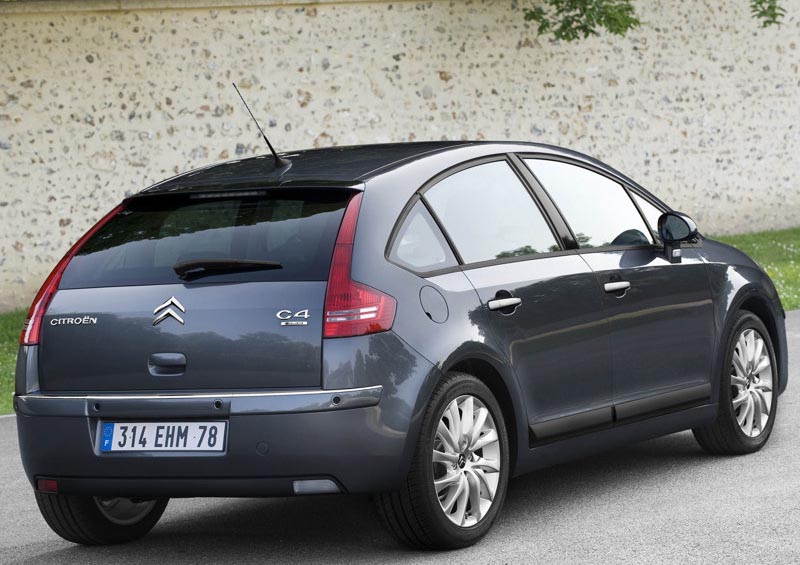
Changes to the exterior focus on restyling the vehicle's front end, bringing the Citroën C4 in line with the prestigious looks of the recently launched Citroën C5. Its new bonnet features a more rounded, curvier design, whilst the grille benefits from restyled integrated chevrons. The front bumper has also been revamped and the number plate repositioned for a stronger, sportier, more dynamic look.

The rear lights of the Citroën C4 Coupe are now finished in transparent crystal and a choice of three new alloy wheel styles - either 16-inch or 17-inch - as well as two new body colours - Bourrasque and Recif blue are now available. For added elegance, chrome inserts are featured on some models.

In the cabin, the Citroën C4 has been improved for enhanced comfort whilst, for greater clarity, the rev counter has been relocated to the innovative translucent central display unit. As with the award-winning Citroën C4 Picasso, a plush grain is now featured on the dashboard and doors for a more upmarket feel. New decors have been designed with an improved quality finish whilst the integrated scented air freshener makes the interior smell as good as it looks.

The Citroën C4 also retains much of the innovative equipment that made it a standard-setter when it was launched. Drivers can benefit from convenient and reassuring technology such as directional headlamps, front and rear parking assist, lane departure warning system, hill start assist, laminated side windows, speed limiter and cruise control.

The new Citroën C4 arrives with all of the safety equipment that made the original Citroën C4 such a reassuring car to drive, including the unique to Citroën torso shaped driver's airbag that can be incorporated because of the fixed-centre steering wheel. The original Citroën C4 achieved some of the highest EuroNCAP ratings in the segment for frontal impact, child protection as well as a 3-star pedestrian safety rating.

Citroën's latest generation navigation system, NaviDrive, has also been introduced, which features a hi-resolution 7-inch colour screen with Europe-wide satellite navigation, real time traffic reports as well as an audio system with built-in 30GB hard drive. The system also offers a video auxiliary socket and a USB connection.

The Citroën C4 is now available with two new petrol engines which have been co-developed with the BMW group - the 1.6 16v VTi 120hp and the 1.6 16v THP 150hp. Both units offer the optimum blend of performance, driving pleasure and fuel economy, with significantly lower consumption and CO2 emissions.

Citroën C4 1.6 16V VTi 120hp (Variable valve lift and Timing Injection)
The VTi 120hp petrol engine, with a manual or automatic gearbox, replaces the 1.6i 16V 110hp unit, offering an economical and responsive driving experience, with fuel efficiency of 42.2mpg and CO2 emissions of 159g/km on the combined cycle (down 6% on the former unit).

The VTi unit is fitted with an aluminium block and cylinder head and features continuously variable valve timing. The intake valves also benefit from a system that allows their maximum travel to be adjusted gradually depending on the force applied to the accelerator pedal. These two features boost engine efficiency and increase responsiveness with some 90% of maximum torque available all the way through the rev range from under 2,000 through to 6,000rpm.

Citroën C4 1.6i 16V THP 150hp (Turbo High Pressure)
The new THP 150hp (Turbo High Pressure) engine provides the perfect blend of higher performance, driving pleasure and economy with significantly lower fuel consumption and CO2 emissions. With its six-speed manual gearbox, the THP 150hp's fuel consumption is 40.9mpg on the combined cycle with CO2 emissions of 164g/km.

The THP 150hp features engine technology that is new to the Citroën C4 range with the introduction of direct sequential injection and a twin-scroll turbocharger as well as continuously variable inlet valve timing. This gives the engine excellent low-down pulling power with maximum torque of 177lb.ft almost all the way from just 1,400 through to 3,500rpm and continues strongly through the rev range.

Citroën's HDi diesel engine line-up is widely recognised for its frugal, clean and dynamic qualities, and in keeping with the model's upgrade, the Citroën C4's diesel engine range has also been improved.

The 2.0HDi unit with six-speed manual gearbox and particulate filter fitted as standard, boasts fuel efficiency of 53.3mpg on the combined cycle and CO2 emissions of just 140g/km. The other diesel powered models - the 1.6HDi 92hp and 1.6HDi 16V 110hp DPFS EGS - are just as dynamic as before and now even greener thanks to a switch to low rolling resistance Michelin Energy Saver® tyres, available on 16-inch wheels, which reduce the fuel consumption and lower the CO2 emissions.

The original Citroën C4 was one of the most environmentally friendly cars in the small family segment with two models returning emissions of 120g/km. Now, with its reduced emissions, the Citroën C4 is even cleaner and even greener.

Citroen C4, 2009

Citroen C4, 2009


Citroën's dynamic C4 range is now more alive with technology than ever before. An exciting new look gives the popular model even more appeal with new exterior and interior styling, updated equipment, body colours and wheel designs, as well as the introduction of two new low CO2, fuel efficient, petrol engines co-developed with BMW. HDi models will also be available with new low-rolling resistance Michelin tyres for improved fuel consumption and CO2 emissions.

Changes to the exterior focus on restyling the vehicle's front end, bringing the Citroën C4 in line with the prestigious looks of the recently launched Citroën C5. Its new bonnet features a more rounded, curvier design, whilst the grille benefits from restyled integrated chevrons. The front bumper has also been revamped and the number plate repositioned for a stronger, sportier, more dynamic look.

The rear lights of the Citroën C4 Coupe are now finished in transparent crystal and a choice of three new alloy wheel styles - either 16-inch or 17-inch - as well as two new body colours - Bourrasque and Recif blue are now available. For added elegance, chrome inserts are featured on some models.

In the cabin, the Citroën C4 has been improved for enhanced comfort whilst, for greater clarity, the rev counter has been relocated to the innovative translucent central display unit. As with the award-winning Citroën C4 Picasso, a plush grain is now featured on the dashboard and doors for a more upmarket feel. New decors have been designed with an improved quality finish whilst the integrated scented air freshener makes the interior smell as good as it looks.

The Citroën C4 also retains much of the innovative equipment that made it a standard-setter when it was launched. Drivers can benefit from convenient and reassuring technology such as directional headlamps, front and rear parking assist, lane departure warning system, hill start assist, laminated side windows, speed limiter and cruise control.

The new Citroën C4 arrives with all of the safety equipment that made the original Citroën C4 such a reassuring car to drive, including the unique to Citroën torso shaped driver's airbag that can be incorporated because of the fixed-centre steering wheel. The original Citroën C4 achieved some of the highest EuroNCAP ratings in the segment for frontal impact, child protection as well as a 3-star pedestrian safety rating.

Citroën's latest generation navigation system, NaviDrive, has also been introduced, which features a hi-resolution 7-inch colour screen with Europe-wide satellite navigation, real time traffic reports as well as an audio system with built-in 30GB hard drive. The system also offers a video auxiliary socket and a USB connection.

The Citroën C4 is now available with two new petrol engines which have been co-developed with the BMW group - the 1.6 16v VTi 120hp and the 1.6 16v THP 150hp. Both units offer the optimum blend of performance, driving pleasure and fuel economy, with significantly lower consumption and CO2 emissions.

Citroën C4 1.6 16V VTi 120hp (Variable valve lift and Timing Injection)
The VTi 120hp petrol engine, with a manual or automatic gearbox, replaces the 1.6i 16V 110hp unit, offering an economical and responsive driving experience, with fuel efficiency of 42.2mpg and CO2 emissions of 159g/km on the combined cycle (down 6% on the former unit).

The VTi unit is fitted with an aluminium block and cylinder head and features continuously variable valve timing. The intake valves also benefit from a system that allows their maximum travel to be adjusted gradually depending on the force applied to the accelerator pedal. These two features boost engine efficiency and increase responsiveness with some 90% of maximum torque available all the way through the rev range from under 2,000 through to 6,000rpm.

Citroën C4 1.6i 16V THP 150hp (Turbo High Pressure)
The new THP 150hp (Turbo High Pressure) engine provides the perfect blend of higher performance, driving pleasure and economy with significantly lower fuel consumption and CO2 emissions. With its six-speed manual gearbox, the THP 150hp's fuel consumption is 40.9mpg on the combined cycle with CO2 emissions of 164g/km.

The THP 150hp features engine technology that is new to the Citroën C4 range with the introduction of direct sequential injection and a twin-scroll turbocharger as well as continuously variable inlet valve timing. This gives the engine excellent low-down pulling power with maximum torque of 177lb.ft almost all the way from just 1,400 through to 3,500rpm and continues strongly through the rev range.

Citroën's HDi diesel engine line-up is widely recognised for its frugal, clean and dynamic qualities, and in keeping with the model's upgrade, the Citroën C4's diesel engine range has also been improved.

The 2.0HDi unit with six-speed manual gearbox and particulate filter fitted as standard, boasts fuel efficiency of 53.3mpg on the combined cycle and CO2 emissions of just 140g/km. The other diesel powered models - the 1.6HDi 92hp and 1.6HDi 16V 110hp DPFS EGS - are just as dynamic as before and now even greener thanks to a switch to low rolling resistance Michelin Energy Saver® tyres, available on 16-inch wheels, which reduce the fuel consumption and lower the CO2 emissions.

The original Citroën C4 was one of the most environmentally friendly cars in the small family segment with two models returning emissions of 120g/km. Now, with its reduced emissions, the Citroën C4 is even cleaner and even greener.

Citroen C4 Coupe, 2009

Citroen C4 Coupe, 2009


Citroën has made a number of changes to the Citroën C4 to make it even more:
    * elegant, dynamic and efficient,
    * economical and low on emissions,
    * interactive and communicative.

Citroën has made some judicious styling tweaks to strengthen the car's successful design, which has been a hit with the public right from the start. The restyle focused on the front end, emphasising its elegance, strength and energy.

The interior has also been redesigned. Citroën has added new upholstery and a new grain on several trim parts, and incorporated the rev counter in the middle of the dashboard.

Engine-wise, the Citroën C4 is now available with two new petrol engines co-developed with BMW. The VTi 120 and THP 150 units bring even more on-road pleasure and significantly reduce fuel consumption and emissions.

The HDi diesel engine range has been further enhanced, with many powerplants qualifying for the Airdream® eco-signature. The 2-litre HDi diesel engine is the first to comply with the future Euro V standard in this family. Through the use of new technology (such as low-rolling resistance tyres), several versions with the HDi 92 or HDi 110 paired with a manual or EGS6 gearbox can limit their emissions to 120 g/km of CO2.

The new Citroën C4 boasts a richer array of telematics equipment, notably a new-generation navigation system - MyWay - which comes with a Bluetooth® function and can be connected to portable equipment.

The restyled Citroën C4 retains all the features that have made it a trailblazer in the segment on driving pleasure and safety, including Xenon dual function directional headlamps, the lane departure warning system, the fixed-centred controls steering wheel and hill start assist.

Citroen C4 Coupe, 2009

Citroen C4 Coupe, 2009


Citroën has made a number of changes to the Citroën C4 to make it even more:
    * elegant, dynamic and efficient,
    * economical and low on emissions,
    * interactive and communicative.

Citroën has made some judicious styling tweaks to strengthen the car's successful design, which has been a hit with the public right from the start. The restyle focused on the front end, emphasising its elegance, strength and energy.

The interior has also been redesigned. Citroën has added new upholstery and a new grain on several trim parts, and incorporated the rev counter in the middle of the dashboard.

Engine-wise, the Citroën C4 is now available with two new petrol engines co-developed with BMW. The VTi 120 and THP 150 units bring even more on-road pleasure and significantly reduce fuel consumption and emissions.

The HDi diesel engine range has been further enhanced, with many powerplants qualifying for the Airdream® eco-signature. The 2-litre HDi diesel engine is the first to comply with the future Euro V standard in this family. Through the use of new technology (such as low-rolling resistance tyres), several versions with the HDi 92 or HDi 110 paired with a manual or EGS6 gearbox can limit their emissions to 120 g/km of CO2.

The new Citroën C4 boasts a richer array of telematics equipment, notably a new-generation navigation system - MyWay - which comes with a Bluetooth® function and can be connected to portable equipment.

The restyled Citroën C4 retains all the features that have made it a trailblazer in the segment on driving pleasure and safety, including Xenon dual function directional headlamps, the lane departure warning system, the fixed-centred controls steering wheel and hill start assist.